
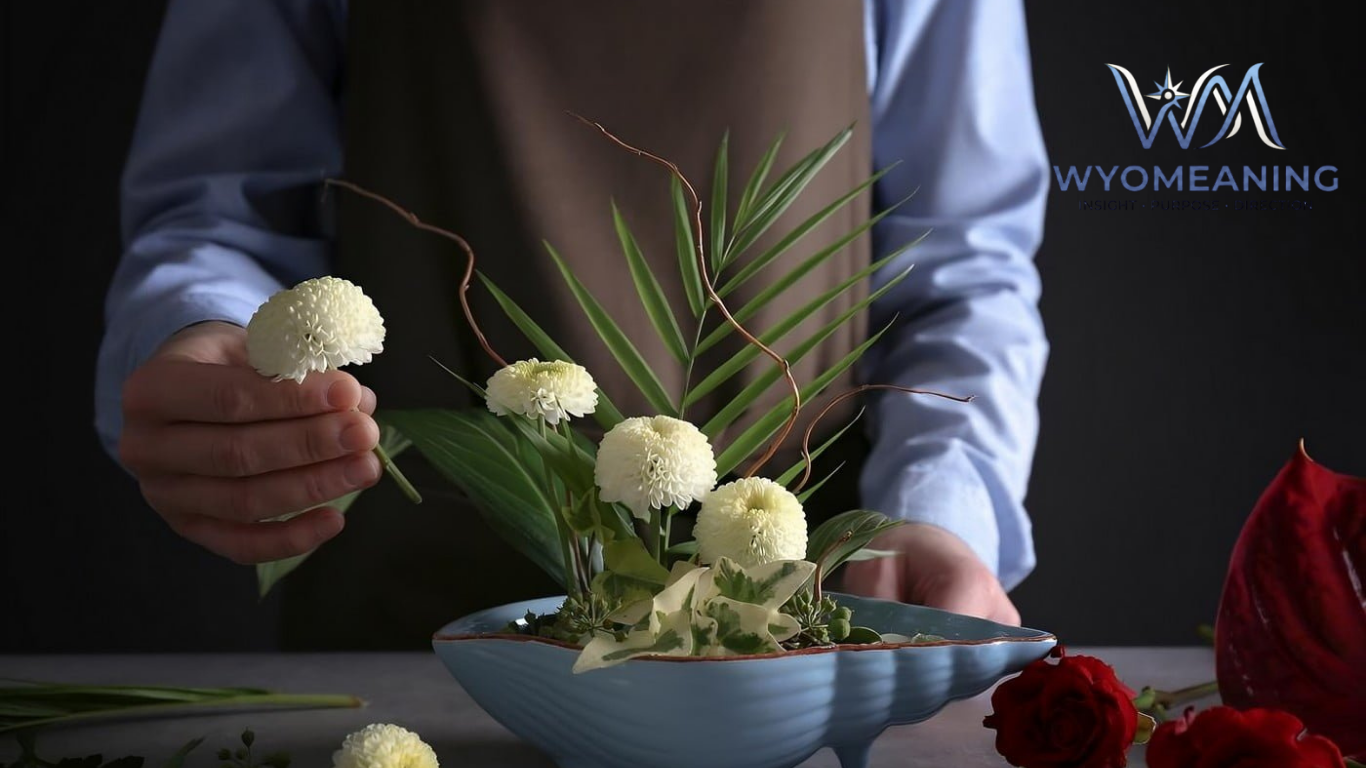
In a quiet room, a single stem rises at an angle, balanced against empty space and the curve of a vessel. This is ikebana, the Japanese art of flower arrangement, a practice that has captivated people for centuries. Far more than decorative floristry, it treats plant materials as living elements that express harmony, seasonality and the relationship between humanity and nature.
Readers continue to seek out ikebana because it offers something rare in modern life: stillness, mindfulness and a refined aesthetic that values suggestion over abundance. Whether encountered in a Kyoto temple, a contemporary gallery or a home workshop abroad, the Japanese art of flower arrangement invites quiet attention and personal reflection. Its principles of asymmetry, line and space feel both ancient and strikingly relevant today.
Origins and Early Development
Ikebana’s roots stretch back to the sixth century, when Buddhism arrived in Japan from China via Korea. Priests began placing flowers as offerings, known as kuge, before images of the Buddha. These early arrangements formed part of the mitsugusoku, a set of three ceremonial objects that also included an incense burner and a candleholder.
Over time the practice moved beyond temple altars. During the Muromachi period (1333–1568), the tokonoma alcove appeared in aristocratic residences built in the shoin-zukuri style. Flowers displayed there became an integral part of refined interior decoration. Historical records from 1462 mention the priest Senkei Ikenobō of Kyoto’s Rokkakudō Temple creating arrangements that earned widespread praise. Rokkakudō, traditionally linked to Prince Shōtoku and founded in the late sixth century, remains closely associated with the birth of formal ikebana.
By the late fifteenth and early sixteenth centuries, styles such as tatehana (standing flowers) had developed. These upright compositions used a central stem and supporting materials to evoke natural landscapes and cosmological ideas of heaven, humanity and earth. Sen’ō Ikenobō later articulated a deeper philosophy: arrangements should capture the essential character of plants, including withered or imperfect elements, rather than merely showcasing perfect blooms.
The Rise of Distinct Styles and Schools
As ikebana matured, it diversified. The elaborate rikka style, refined in the late sixteenth and early seventeenth centuries, created complex, multi-stem compositions that suggested entire landscapes. A simpler form, shōka (or seika), emphasising three main lines representing heaven, man and earth, gained popularity among townspeople during the Edo period.
The tea ceremony, perfected by Sen no Rikyū in the late sixteenth century, inspired chabana—austere “tea flowers” that favoured natural appearance and restraint. Parallel free-style approaches known as nageire (“thrown-in”) allowed stems to rest more loosely in tall vases.
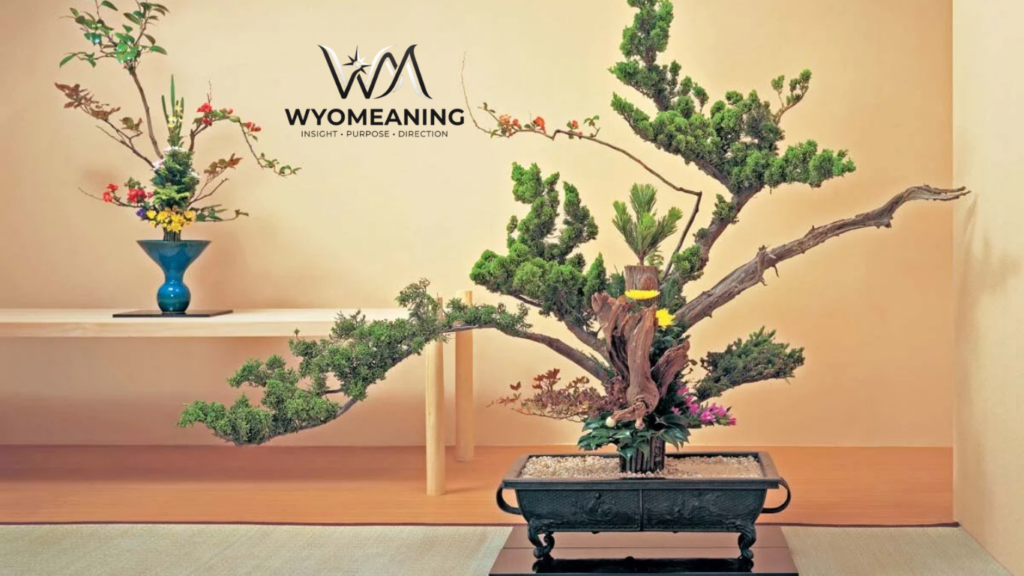
Three major schools dominate today. Ikenobō, the oldest, traces its continuous lineage to the Muromachi period and remains headquartered beside Rokkakudō Temple. It preserves classical forms such as rikka and shōka while also embracing freer contemporary expressions. The Ohara school, founded by Unshin Ohara at the end of the nineteenth century, introduced moribana—arrangements in shallow containers that could incorporate Western flowers and suggest landscape scenes suited to modern interiors. The Sōgetsu school, established in 1927 by Teshigahara Sōfū, prioritises individual creativity and the idea that anyone can arrange flowers anywhere with any materials.
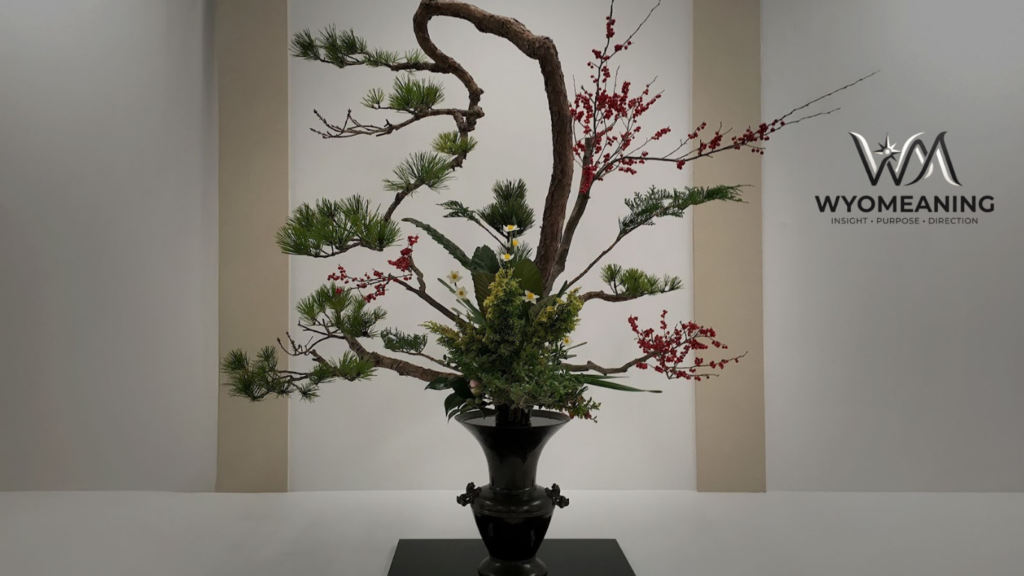
These schools, along with many others, have ensured that the Japanese art of flower arrangement continues to evolve while retaining its core respect for plant life and spatial harmony.
Principles and Practice
At the heart of ikebana lie several guiding ideas. Asymmetry and the deliberate use of empty space (ma) create balance more subtle than Western symmetry. Materials are chosen for seasonal appropriateness and for their lines, textures and colours rather than sheer quantity. The container is never merely a vessel; it forms an equal partner in the composition.
Practitioners traditionally work in silence, cutting stems with specialised shears and fixing them in a kenzan (needle-point holder) or with other supports. The process itself is meditative, fostering attentiveness to the fleeting beauty of living things—an echo of the Japanese concept of mono no aware, the pathos of transient things.
Modern practitioners often adapt these principles to contemporary settings, using local flora outside Japan or experimenting with non-plant materials in freestyle work. Sustainability has also become important; many prefer the reusable kenzan over floral foam.
Challenges and Adaptation
Like many traditional arts, ikebana has faced periods of decline and reinvention. Rapid Westernisation in the Meiji era prompted the creation of more accessible styles such as moribana. After the Second World War, masters actively promoted the art internationally through exhibitions and teaching. In Japan itself, changing lifestyles and demographics have reduced the number of long-term practitioners in some communities, yet the practice remains taught in schools, community classes and specialised academies.
In 2024 ikebana received recognition as a Registered Intangible Cultural Property in Japan, underscoring official efforts to safeguard its transmission. Globally, organisations such as Ikebana International, founded in 1956 by Ellen Gordon Allen under the motto “Friendship through Flowers,” have helped sustain interest across dozens of countries.
Personal and Cultural Life of the Practice
Ikebana has long been intertwined with Japanese cultural life. Historically practised by priests, aristocrats and later by women as part of bridal training, it is now enjoyed by people of all ages and backgrounds. Public exhibitions, department-store displays and international conventions keep the art visible. Many practitioners speak of the quiet satisfaction and sense of connection to nature that regular practice brings.
Confirmed public information focuses on the art itself rather than the private lives of individual masters. What is clear is the continuing role of hereditary headmasters (iemoto) within major schools and the growing presence of independent artists who treat ikebana as contemporary sculpture.
Later Developments and Current Activities
Today the Japanese art of flower arrangement thrives both in traditional and innovative forms. Schools maintain chapters worldwide, offering classes and ranking systems that reward dedicated study. Contemporary artists experiment with large-scale installations, unconventional materials and even digital or virtual-reality experiences that introduce the principles to new audiences.
Ikebana appears in fashion presentations, hotel interiors and sustainable floral design. Its influence can be seen in the wider shift towards sculptural, linear arrangements that favour negative space and seasonal materials over massed bouquets. Community groups, online resources and international gatherings ensure that beginners and advanced practitioners alike can engage with the tradition.
Quick Facts
| Detail | Information |
|---|---|
| Full Name | Ikebana (生け花) or Kadō (華道 / 花道) |
| Approximate Origins | 6th century (Buddhist offerings); formalised mid-15th century |
| Place of Origin | Japan (notably Kyoto’s Rokkakudō Temple) |
| Cultural Affiliation | Japanese |
| Nature of Practice | Traditional and contemporary floral art |
| Period of Development | Muromachi period onward |
| Known For | Asymmetry, use of space, seasonal materials, spiritual dimension |
| Major Schools | Ikenobō, Ohara, Sōgetsu |
Legacy and Lasting Impact
Ikebana endures because it offers more than visual beauty. It cultivates patience, observation and an appreciation for the imperfect and the ephemeral. Its influence extends beyond Japan, shaping contemporary floristry, interior design and mindfulness practices around the world. Public perception remains that of a refined yet accessible art—one that rewards quiet study while remaining open to personal expression.
conclusion
The lessons it embodies—harmony with nature, respect for living materials, and the expressive power of restraint—continue to resonate. In an age of constant stimulation, the Japanese art of flower arrangement reminds us that beauty often lies in careful placement and thoughtful emptiness.





Leave a Reply