
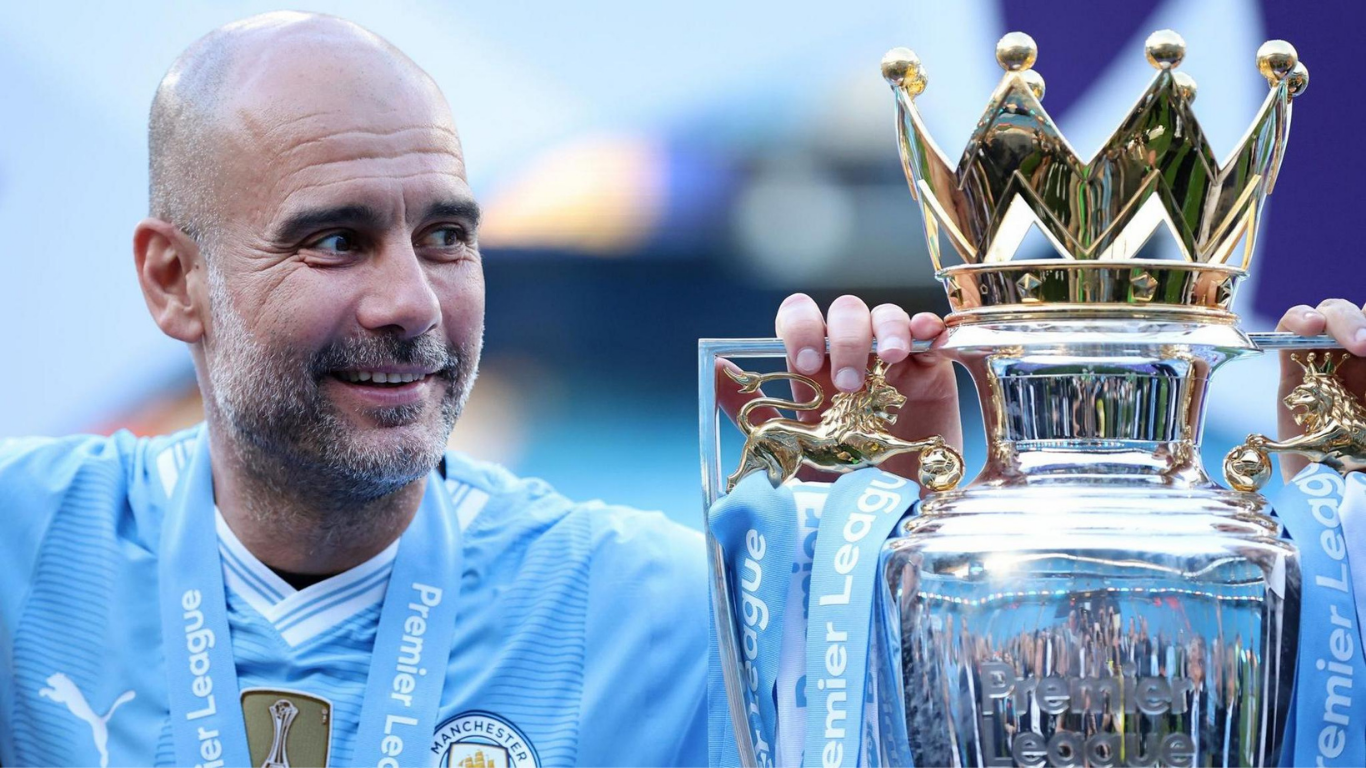
Man City Charges have become the most talked-about topic in English football — and honestly, it’s not hard to see why. More than three years after the Premier League formally accused Manchester City of over 115 financial rule breaches, the football world is still waiting on a verdict that could reshape the entire landscape of the Premier League. It’s a case so staggering in scale and complexity that it has been dubbed, quite rightly, the “trial of the century.”
From allegations of inflated sponsorship deals and hidden player payments to claims of outright non-cooperation with regulators, the Man City Charges cover a nine-year period and raise fundamental questions about competitive fairness, financial transparency, and the integrity of English football’s top division. Whether you’re a City supporter, a rival fan, or simply someone who cares about the sport, this case matters — and it matters enormously.
What Exactly Are the Man City Charges?
At the heart of this saga are 115 alleged breaches of the Premier League’s financial regulations, covering seasons from 2009/10 through to 2017/18. The charges were formally announced on 6 February 2023, following a lengthy four-year investigation by the Premier League. Some reports have since suggested the actual number of individual rule breaches is closer to 130, with legal analysts noting the “115” figure emerged from how the original document counted season-rule combinations.
In plain English, the Man City Charges allege that the club:
- Failed to provide accurate and up-to-date financial information across multiple seasons, particularly regarding sponsorship revenue, operating costs, and related-party transactions.
- Understated or misrepresented payments made to players and managers, in breach of regulations requiring full transparency on remuneration.
- Breached Profitability and Sustainability Rules (PSR), which limit the level of financial losses a club can accumulate over a rolling three-year period.
- Failed to co-operate with the Premier League’s own investigation over several years — a serious standalone breach in itself.
It is worth noting that these are alleged breaches. Manchester City have strenuously denied all charges and have consistently maintained they possess a “comprehensive body of irrefutable evidence” supporting their position. The club remains, publicly and firmly, totally confident of being cleared.
A Breakdown of the Charges by Category
Understanding the Man City Charges requires looking at how they are grouped. The allegations don’t form one big accusation — they are dozens of individual counts spread across several categories. Here’s a clear breakdown:
| Category | Approximate Number of Charges | Period Covered |
| Inaccurate financial reporting (revenue/sponsorship) | ~54 | 2009/10 – 2017/18 |
| Inaccurate player & manager remuneration reporting | ~14 | 2009/10 – 2017/18 |
| Breach of Profitability and Sustainability Rules | ~7 | Multiple seasons |
| Failure to co-operate with PL investigation | ~35 | December 2018 – February 2023 |
| Other financial transparency breaches | ~5 | Various |
The most serious allegations relate to sponsorship income. Premier League rules require clubs to ensure that commercial deals — particularly those involving related parties, such as Abu Dhabi-linked sponsors — are valued at genuine market rates. The league alleges that City inflated the value of such deals to make their financial position appear healthier than it actually was. The non-cooperation charges, covering a period from December 2018 onwards, are also significant: failing to assist a regulatory investigation is treated as a serious and separate violation.
How Did the Man City Charges Come About?
Well, it didn’t happen overnight. The whole affair can be traced back to November 2018, when the German publication Der Spiegel published a series of reports under the “Football Leaks” banner. Those reports were based on a vast cache of leaked internal documents — including emails, contracts, and financial records — which appeared to show Manchester City manipulating their accounts and misleading UEFA over Financial Fair Play (FFP) compliance.
Those revelations triggered a UEFA investigation. In February 2020, UEFA found City guilty and handed down a two-season ban from European competition, along with a €30 million fine. However, City appealed that ruling to the Court of Arbitration for Sport (CAS), and in July 2020, CAS overturned the ban — finding that the most serious charges had not been proven to the required standard, and that others had passed their limitation period.
That CAS victory was a significant one for City. But the Premier League had already begun its own separate investigation, operating under domestic rules and with different evidential standards. After four years of gathering documents and evidence, the league formally referred the matter to an independent commission in February 2023 — bringing the world of Man City Charges firmly into the public consciousness.
The Role of Football Leaks and the Der Spiegel Investigation
You really can’t tell this story without giving proper credit — or scrutiny — to Football Leaks. The leak involved over 70 million documents, believed to have been obtained by Portuguese hacker Rui Pinto, who later cooperated with authorities and provided evidence to European prosecutors. The documents appeared to show not just City, but dozens of clubs and players, engaging in financial practices designed to circumvent regulations.
For Manchester City specifically, the leaked materials allegedly showed:
- Internal emails suggesting City executives were aware that some sponsorship deals had been artificially inflated to meet FFP requirements.
- That Sheikh Mansour’s ownership group had secretly been funding a portion of the club’s operating costs, disguised as commercial sponsorship income from Etihad Airways.
- Discussions about how to handle UEFA inquiries in ways that obscured the true nature of certain financial arrangements.
City have consistently described these documents as either false, taken out of context, or misinterpreted. Their legal team argued successfully at CAS that the UEFA case was built on unreliable foundations. The question for the Premier League’s independent commission is whether the domestic evidence — gathered over four years of investigation — tells a different story.
The Hearing: What Happened Inside the Room
The hearing into the Man City Charges is the most complex legal proceeding in English football history. After years of procedural delays, the hearing finally began on 16 September 2024 at London’s International Dispute Resolution Centre. It ran for approximately 12 weeks — a staggering length — before concluding on 6 December 2024.
The process was conducted in private, before an independent three-person commission. Unlike a court case, the proceedings are not open to the public, and neither the Premier League nor Manchester City are permitted to discuss the details while the panel deliberates.
What we do know is this:
- Both sides presented their cases over dozens of hearing days.
- The commission heard from witnesses, reviewed financial documents, and examined expert testimony on accounting standards and market valuations.
- Manchester City’s legal team reportedly submitted a substantial body of evidence, which the club describes as conclusively supporting their innocence.
- The Premier League, for its part, presented the findings of its four-year investigation, including whatever documentary and testimonial evidence it gathered.
City manager Pep Guardiola — who arrived at the club in 2016 and is not alleged to have had any knowledge of the financial matters under scrutiny — has defended the club’s hierarchy throughout. Guardiola told BBC Sport: “I trust them. I spoke with them and trust how they behave and how they did.” It’s a sentiment that has remained consistent throughout a long and draining saga.
The Verdict: Where Does It Stand in 2026?
Here’s the frustrating reality: as of June 2026, there is still no verdict. The hearing concluded in December 2024, and a ruling was initially expected around February 2025. That deadline came and went. Then October 2025 was mentioned. That passed too.
The delay has been enormous — and it’s understandably caused frustration on all sides. Premier League CEO Richard Masters acknowledged the situation, though he has been bound by confidentiality rules from revealing any specific information about timing or content. When pressed, he said: “It’s a confidential process, so I really can’t give any information out on timing or anything like that.”
The reasons for the delay are believed to be rooted in the sheer complexity of the case. The independent commission is working through vast volumes of financial evidence, expert reports, and legal submissions. The fact that commission members work on a part-time basis has also been cited as a contributing factor to the extended deliberation period.
Encouragingly, as of late May 2026, there are now credible reports suggesting the verdict could finally arrive within weeks — perhaps during the summer of 2026. One report cited a source with inside knowledge of the process as saying there is now “a seriously confident expectation” of a decision arriving in the coming weeks. For everyone involved — City, the Premier League, rival clubs, and fans — that day cannot come soon enough.
What Punishments Could Manchester City Face?
This is the question everyone’s asking, and the honest answer is: the range is enormous. The Premier League deliberately chose not to pre-set specific punishments for financial rule breaches, specifically to prevent clubs from calculating whether breaking the rules might be worth the predetermined consequence. That means the independent commission has significant discretion.
- Fines — substantial financial penalties, though these alone would be considered a light outcome given the scale of the alleged breaches.
- Points deductions — this is what most clubs fear. Points could be deducted from the current season or, more dramatically, from past seasons, which could result in stripping previously won titles.
- Transfer or registration bans — preventing City from registering new players for a defined period.
- Expulsion from the Premier League — the nuclear option, considered unlikely but technically possible.
- Other orders as the commission thinks fit — a deliberately broad catch-all provision.
Critically, both sides have the right to appeal any verdict. Any appeal would delay enforcement of any punishment by several more months.
How Other Premier League Clubs Are Responding
Behind the scenes, Premier League boardrooms have been quietly preparing for the fallout. There is particular interest in what a retrospective points deduction might look like: clubs that finished below City during the affected seasons could theoretically see their final positions revised.
There’s no sugarcoating the potential consequences here. Small wonder that some Premier League insiders have described the current moment as the “quiet before the storm.”
At the same time, many within the game express hope that, whatever the verdict, it will bring clarity and allow the sport to move forward. A definitive resolution, whichever way it goes, is something the entire sport needs.
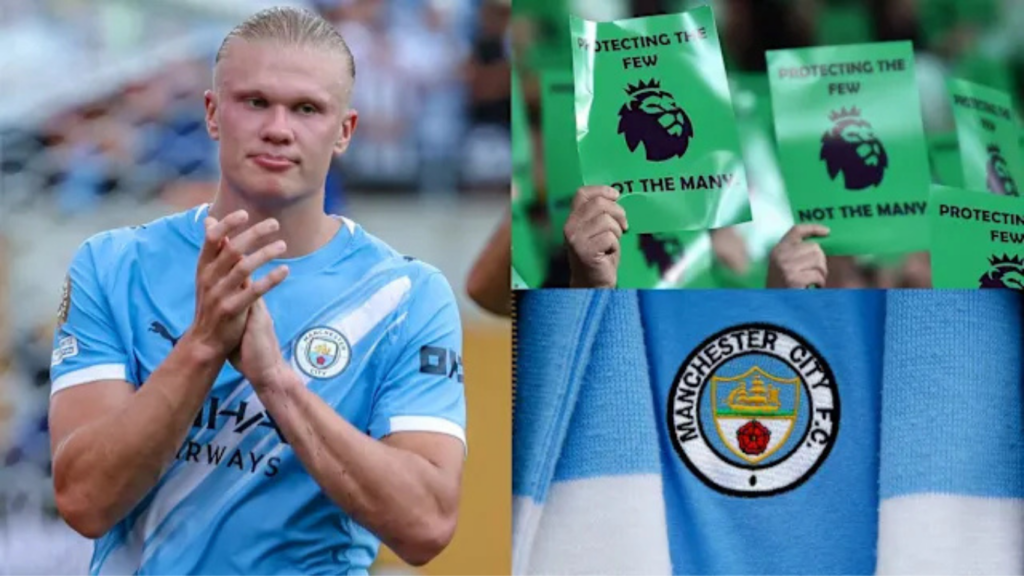
Manchester City’s Defence: The Club’s Position
Manchester City’s response to the charges has been consistent, confident, and comprehensive. From day one, the club has denied all allegations. Their legal strategy has focused on challenging the Premier League’s interpretation of the financial documents, contesting the valuation methodology applied to sponsorship deals, and asserting that the leaked Football Leaks documents were unreliable or misrepresented.
City have also pointed to their CAS victory over UEFA as evidence that allegations of this kind, when properly scrutinised, do not hold up. Their communications team has repeatedly emphasised the club’s “comprehensive body of irrefutable evidence” and their confidence in the independent commission’s process.
To be fair to City, the CAS ruling in 2020 was genuinely significant. The Court of Arbitration found that the key charges lacked sufficient evidence and that UEFA had not met the required standard of proof. Whether the Premier League’s case — built on four years of domestic investigation and governed by different procedural standards — is stronger is precisely what the commission is now deciding.
What Happens After the Verdict?
Whatever the outcome of the Man City Charges, the aftermath will be complex. Here’s what to expect:
- If City are cleared: The club will have its reputation vindicated, though years of uncertainty and distraction cannot be undone. The Premier League’s investigative process itself will face scrutiny for the time and cost involved.
- If City are found guilty of some charges: A nuanced ruling could result in partial sanctions — potentially fines or lesser points deductions. Both sides could appeal specific findings.
The commission’s verdict, when it arrives, is expected to be a lengthy and detailed document — potentially running to hundreds of pages — given the complexity of the evidence and arguments involved. The football world will be poring over every word.
The Bigger Picture: What Man City Charges Mean for Football Governance
Regardless of the verdict, the Man City Charges have already changed English football.
The case raises important questions:
- Should the Premier League adopt clearer, pre-set sanctions for financial breaches to deter future violations?
- How should football distinguish between legitimate related-party commercial deals and artificial inflation of revenues?
- Is the current judicial process — with part-time panels and no hard timelines — adequate for cases of this complexity?
These questions will be debated long after the Man City Charges are resolved. The hope, shared by fans and administrators alike, is that this case becomes a catalyst for clearer, stronger, and more swiftly enforced financial regulation in English football.
Conclusion
The Man City Charges represent the most significant legal and regulatory challenge in the history of English football. From their origins in the Football Leaks revelations of 2018, through a four-year Premier League investigation, a gruelling 12-week hearing, and now an agonising wait for a verdict that has stretched well beyond 18 months, this case has tested the limits of football governance in ways no one could have anticipated.
Manchester City maintain their innocence with every ounce of conviction they can muster. The Premier League stands by the integrity of its investigation. And the independent commission continues its deliberations, carrying the weight of an entire sport’s expectations on its shoulders.
What happens next will matter — not just for Manchester City, but for every club in the Premier League, for every fan who cares about fairness, and for the future of financial regulation in football. The Man City Charges are, in every sense of the phrase, a defining moment. And when the verdict finally lands — perhaps within weeks — it will be a moment none of us will forget.
FAQs
Q1. What are the Man City Charges exactly?
The Man City Charges are 115 alleged breaches of Premier League financial rules, covering seasons from 2009/10 to 2017/18.
Q2. Has a verdict been reached in the Man City case?
As of June 2026, no verdict has been issued. The hearing concluded in December 2024 after approximately 12 weeks of proceedings. Reports in late May 2026 suggest a verdict may now arrive within weeks.
Q4. Did Manchester City win a similar case at the Court of Arbitration for Sport?
Yes. In July 2020, CAS overturned a UEFA ruling that had banned City from European football for two seasons.







Leave a Reply