
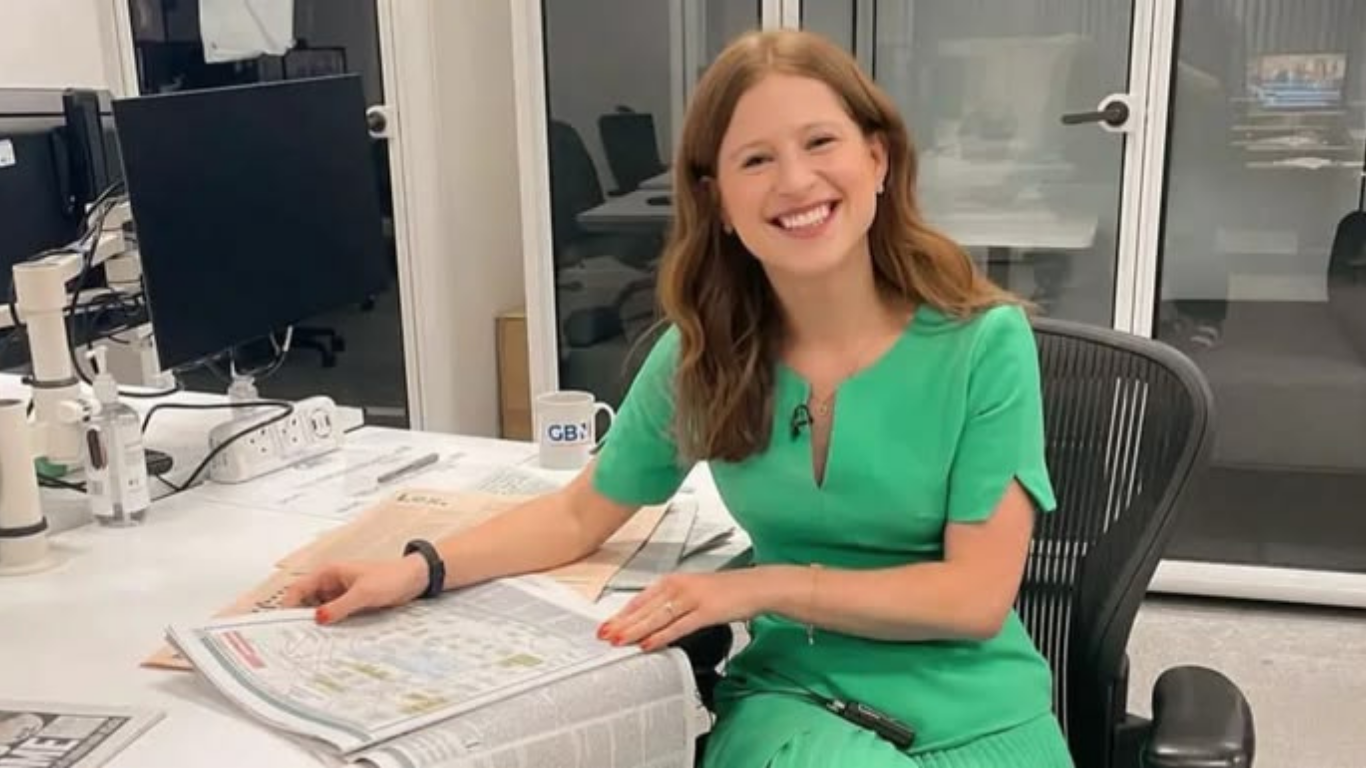
Emily Carver is, without a doubt, one of the most compelling and sharp-minded political voices in British media today. Born on 23 July 1992 in London, she has carved out — quite fittingly — a remarkable career in journalism, political commentary, and television presenting. From the corridors of Westminster to the bright studio lights of GB News, Emily Carver’s journey is a story worth telling in full. She’s not just another talking head on the telly; she’s a woman who built her authority the hard way, with real experience, real knowledge, and an ability to hold her ground in a debate that very few can match.
Whether you’ve caught her on BBC Question Time, spotted her column in The Telegraph, or watched her challenge politicians on GB News, there’s a good chance Emily Carver has already left an impression on you. And if she hasn’t yet — well, she’s about to.
Who Is Emily Carver? A Quick Introduction
Emily Carver is a British political commentator, television presenter, and columnist. She is best known as a presenter on GB News, and for her work at the Institute of Economic Affairs (IEA). She has also contributed to publications such as The Telegraph and The Independent, and has appeared as a panellist on programmes including BBC Question Time and Politics Live.
What makes Emily stand out isn’t just what she says — it’s how she says it. With a calm, confident delivery and a thorough understanding of economic and political policy, she brings both substance and style to every conversation she enters. She’s the kind of journalist who does her homework, and it shows.
Emily Carver’s Educational Background: Building the Foundation
You can’t discuss Emily Carver without talking about how brilliantly she set herself up academically. Her educational journey is, frankly, impressive from start to finish.
She has a degree in French and German from the University of Bristol and an MSc in European Politics from the London School of Economics. That’s a combination that speaks volumes. A solid grounding in languages gave her an appreciation for nuance and cross-cultural communication, while her postgraduate work in European Politics at the LSE — one of the most prestigious institutions in the world — gave her the intellectual rigour needed to navigate complex political landscapes.
Here’s a quick look at her academic profile:
| Qualification | Institution | Subject |
| Undergraduate Degree | University of Bristol | French and German |
| MSc (Postgraduate) | London School of Economics (LSE) | European Politics |
This academic foundation didn’t just look good on paper; it shaped the way Emily approaches every debate, every column, and every interview. She understands the European policy context that so many British commentators tend to overlook, which gives her analysis a depth that’s genuinely rare.
Emily Carver’s Early Career: From Assistant to Policy Adviser
Every great career starts somewhere, and Emily Carver’s began — as many political careers do — in the often unglamorous world of think tanks and parliamentary research. But don’t let that fool you; those early years were the making of her.
Emily Carver started her career in 2015 as an executive assistant at the Henry Jackson Society, a foreign policy think tank based in Westminster. She then joined Edelman, a public relations agency, in 2016 as part of their graduate scheme. She worked on various projects and campaigns for clients in the public and private sectors. In 2017, she moved to the House of Commons, where she worked as a parliamentary researcher and policy adviser for a Conservative MP. She was involved in drafting speeches, briefing papers, press releases, and parliamentary questions. She also liaised with stakeholders, media, and constituents on behalf of the MP.
This period was absolutely crucial. Working inside the House of Commons gave Emily an insider’s view of how political decisions are actually made — not just how they’re reported. She learned the language of power, the mechanics of policy, and the art of communication under pressure. By the time she left Westminster, she wasn’t just a well-read graduate; she was a seasoned political professional.
Rise at the Institute of Economic Affairs: Head of Media
If Emily Carver’s early career was her training ground, then her time at the Institute of Economic Affairs (IEA) was where she truly found her voice. Joining the IEA in 2019 was a turning point — a big one.
In 2019, Emily Carver joined the Institute of Economic Affairs (IEA) as Head of Media. At IEA, she handled external communications and became a central figure in promoting free-market principles through media outlets. Her role required balancing political neutrality with assertive economic messaging — skills she excelled at with confidence. She used this platform to build public recognition through op-eds and debates, while positioning herself as a well-spoken advocate of individual liberty, deregulation, and economic responsibility.
The IEA is a group that provides for economic elements like economic freedom, cheap taxes, good health, and quality education. It’s a prestigious institution with a long history of influencing British economic policy, and being at its media helm was no small feat.
What Emily brought to the IEA was more than just communications expertise — she brought credibility. Her background in parliamentary policy meant she understood the why behind the economic arguments she was promoting. She wasn’t just spinning a message; she was genuinely engaged with the substance. That authenticity came through, and audiences noticed.
In 2019, she joined the Institute of Economic Affairs (IEA) as a media manager. She was responsible for overseeing and expanding the IEA’s media output, including press releases, podcasts, videos, social media, and events.
Emily Carver’s Journey to GB News: A Dream Come True
Here’s where things really start to get exciting. Emily Carver’s transition from think-tank communicator to television presenter is one of those career stories that feels almost too good to be true — except it absolutely happened.
It has been a dream come true to be a presenter on GB News. Before being asked to host my first ever show, Emily was a regular commentator across the channel. She loves the way GB News asks the tough questions, allows both sides of a debate to be heard, and picks stories that the traditional mainstream media simply wouldn’t think to, or would shy away from.
In 2022, Carver joined GB News as a presenter and commentator. Since then, she has become one of the channel’s most recognisable faces, known for her calm but sharp questioning, her willingness to challenge guests from all parts of the political spectrum, and her ability to keep even the most heated debates productive and informative.
Emily regularly presents across GB News and appears regularly as a guest commentator on national and international media. Her writing can be found in The Telegraph, The Independent, and Conservative Home. Previously, Emily headed up the Communications department at free-market think tank the Institute of Economic Affairs.
The fact that she’s appeared on BBC Question Time and Politics Live alongside her GB News work tells you everything you need to know: Emily Carver isn’t just a GB News presenter. She’s a genuinely respected voice across the British media landscape.
What Emily Carver Stands For: Views, Values, and Voice
Emily Carver doesn’t shy away from having opinions — and why should she? That’s precisely what makes a great political commentator. She’s broadly a defender of free-market principles, individual liberty, and limited government intervention. But she’s not ideologically rigid; she engages with ideas critically and intelligently.
Here are some of the core themes that run through Emily Carver’s commentary and writing:
- Economic Freedom: Emily is a firm believer that free markets, when properly functioning, deliver better outcomes for individuals than heavy-handed state intervention. Her time at the IEA deepened this conviction considerably.
- Free Speech: She’s spoken passionately about the importance of open debate and the risks of over-regulation of speech, both in the media and in wider society.
- Individual Responsibility: Emily often argues that individuals should be trusted to make their own decisions — whether on lifestyle, finance, or personal choices — without excessive government paternalism.
- Optimism about Britain: Emily was optimistic about the long-term future of the country, stating: “Let’s all agree not to feel too miserable about the state of Britain. I mean, you know, things might get worse, but they’ll get better in the end.”
That sense of optimism is, in many ways, one of Emily’s most defining qualities. Even when discussing difficult or contentious topics, she manages to project a sense that Britain can, and will, find its way forward.
Emily Carver as a Columnist and Writer: Words That Matter
Television presenting is only one side of Emily Carver’s professional life. She’s also an accomplished writer, with a regular column that gives her the space to develop arguments in a way that the fast pace of live broadcasting sometimes doesn’t allow.
Her writing has appeared in some of Britain’s most well-read publications, and it’s consistently sharp, accessible, and well-argued. She doesn’t write to impress other journalists; she writes to connect with readers.
Here’s a summary of her key writing platforms:
| Publication | Type of Contribution |
| The Telegraph | Political opinion and commentary |
| The Independent | Analysis and opinion pieces |
| Conservative Home | Regular column |
| IEA Website | Economic policy commentary |
Whether she’s tackling government spending, debating the merits of deregulation, or weighing in on a topical social issue, Emily Carver brings the same intellectual honesty to the page as she does to the screen. She’s not afraid to take a position, and she defends her arguments with evidence rather than bluster.
Emily Carver’s Personal Life: Love, Family, and Life Beyond the Studio
Away from the cameras and the keyboard, Emily Carver has built a warm and full personal life. She’s open about the things that matter to her outside of work, and that human side of her personality only adds to her appeal.
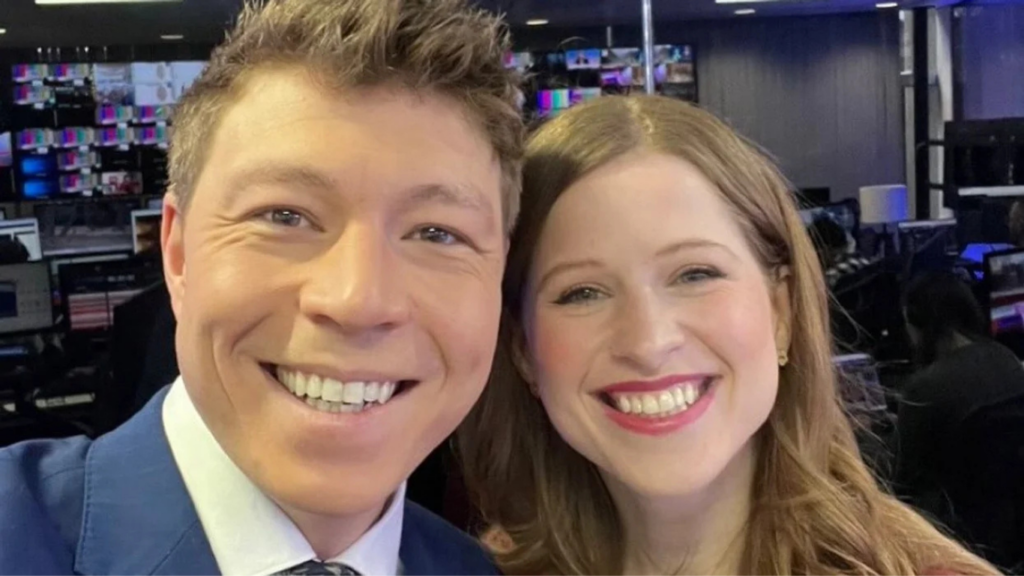
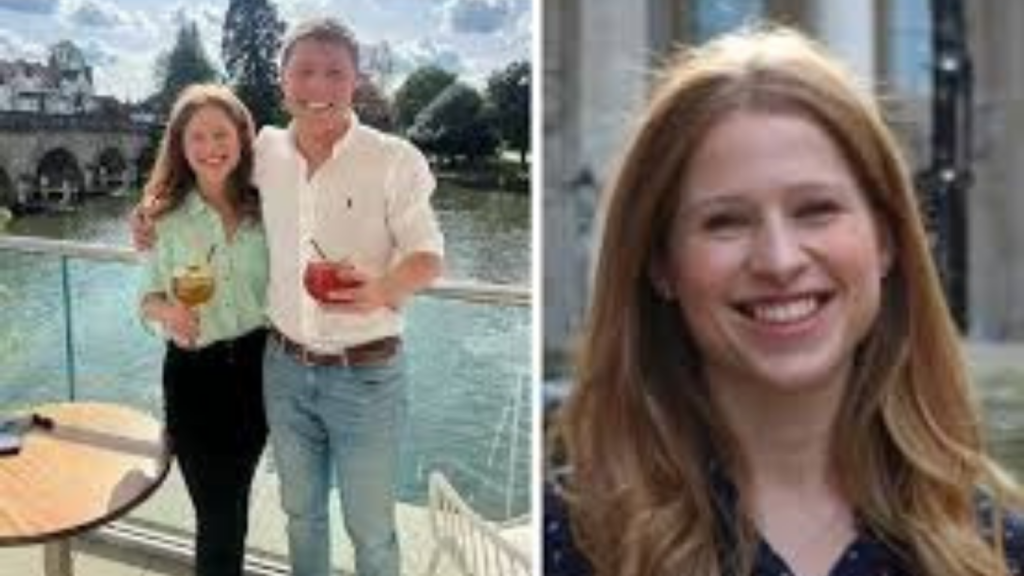
In 2024, Carver married her colleague Patrick Christys, and in September 2025 she gave birth to their son. Patrick Christys is himself a well-known GB News presenter, making them something of a power couple in British broadcasting. Their shared passion for straight-talking journalism and their obvious warmth for each other has made them popular with viewers.
A light-hearted moment in her broadcasting career occurred when a farmer revealed he had named a heifer (young cow) after her, an incident which received media coverage. If that isn’t a sign that you’ve made it as a media personality in Britain, honestly, what is?
Carver has expressed a fondness for the British countryside, particularly the Lake District, and has spoken warmly about her student years in Bristol. There’s something refreshing about a prominent media figure who genuinely seems to appreciate the quieter, simpler pleasures of life.
Emily Carver’s Media Presence and Social Media Influence
In today’s world, a journalist’s reach extends well beyond the television screen or the printed page. Emily Carver understands this, and she uses her social media platforms — particularly X (formerly Twitter) — to engage directly with followers, share her views in real time, and respond to the news of the day.
Emily frequently talks about current political news and gives strong disagreement to some topics. Carver started using Twitter in July 2011. That’s a long track record of online engagement, predating the careers of many of her contemporaries.
Her social media presence is characterised by:
- Directness: She says what she thinks, without unnecessary hedging or watering down.
- Engagement: She actually responds to followers and takes part in debate, rather than just broadcasting one-way.
- Consistency: Her online voice matches her on-screen persona — there’s no disconnect between the “TV Emily” and the “Twitter Emily.”
- Humour: She doesn’t take herself too seriously, which, in the often po-faced world of political media, is genuinely refreshing.
Emily also had a YouTube channel where she hosted a series called “In My Can, We Talk About,” where people from across the political spectrum found out more about their politics and what makes them tick. That kind of cross-spectrum curiosity is a hallmark of a genuine journalist rather than a partisan cheerleader.
Emily Carver’s Contribution to British Broadcasting and Media Culture
Step back and look at the bigger picture, and it becomes clear that Emily Carver’s contribution to British media is more significant than simply the sum of her individual appearances and articles.
And she does it all with a professionalism and intellectual honesty that sets a high standard.
Previously, Emily worked in Westminster for the Institute of Economic Affairs, where she learnt from some of the best economists in the country. Heading up the communications department, she got a taste for broadcasting, and quickly became a regular on GB News, as well as a regular panellist on programmes such as BBC Question Time, Politics Live, and LBC Cross Question.
That breadth — think tank, parliament, television, print — is genuinely rare. Most journalists specialise. Emily Carver has generalised brilliantly, and the result is a voice that’s equally credible talking about fiscal policy, immigration, free speech, or the future of British broadcasting.
A Career Timeline at a Glance
Here’s a quick-reference timeline of Emily Carver’s career milestones:
| Year | Milestone |
| 2015 | Executive Assistant, Henry Jackson Society |
| 2016 | Graduate Scheme, Edelman PR Agency |
| 2017–2019 | Parliamentary Researcher & Policy Adviser, House of Commons |
| 2019 | Joined IEA as Head of Media |
| 2022 | Joined GB News as Presenter and Commentator |
| 2024 | Married Patrick Christys |
| 2025 | Welcomed son George |
Why Emily Carver Matters: A Final Reflection
She’s not just filling airtime or generating controversy for clicks. She’s genuinely trying to inform, challenge, and contribute to the public conversation in a meaningful way. The fact that she’s doing it all while maintaining a warmth and relatability that connects with ordinary viewers makes her even more exceptional.
You just have to know what you’re talking about, believe in what you’re saying, and be willing to show up and make the argument — day after day, column after column, broadcast after broadcast. And on all three counts, Emily Carver delivers.
Conclusion
In a media landscape that can often feel cluttered with noise and short on substance, Emily Carver stands out as a genuinely authoritative and inspiring figure. She champions economic freedom and individual liberty not as abstract slogans, but as principles she has studied, lived, and genuinely believes in. As a presenter, columnist, commentator, and now a mother, Emily Carver continues to grow — in influence, in reach, and in impact. The best, one suspects, is very much still to come.
FAQs
Who is Emily Carver?
Emily Carver is a British political commentator, journalist, and television presenter, best known for her work on GB News and her former role as Head of Media at the Institute of Economic Affairs (IEA).
Where did Emily Carver go to university?
Emily Carver studied French and German at the University of Bristol and completed an MSc in European Politics at the London School of Economics (LSE). Yes. Emily Carver married fellow GB News presenter Patrick Christys in 2024. The couple welcomed their son George in September 2025.
What does Emily Carver write about?
Emily Carver writes about politics, economics, free speech, and public policy. Her columns have appeared in The Telegraph, The Independent, and Conservative Home, among other outlets.
What are Emily Carver’s political views?
Emily Carver broadly supports free-market economics, individual liberty, limited government, and open debate.

Leave a Reply