
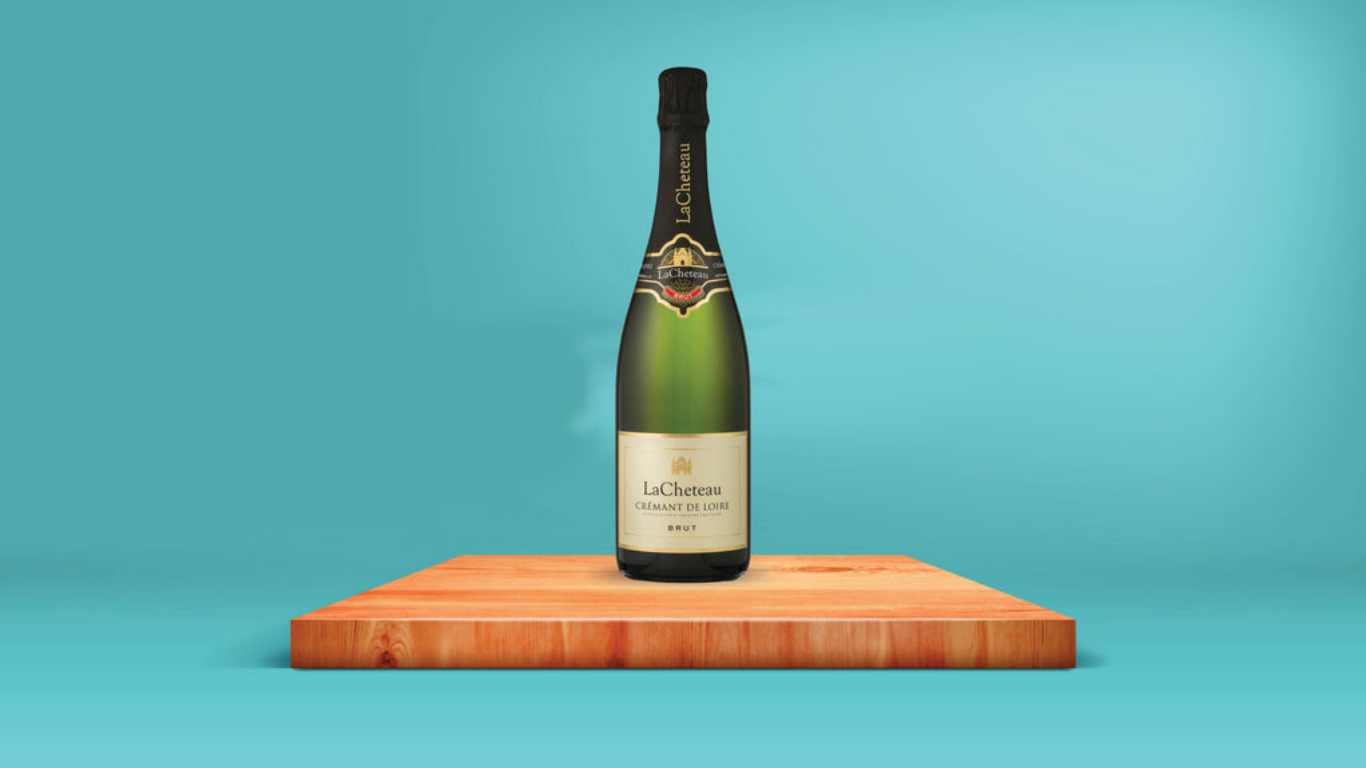
In the rolling vineyards that follow the Loire River through Anjou, Saumur and Touraine, a sparkling wine has quietly earned its place among France’s most reliable pleasures. Crémant de Loire offers the same traditional-method finesse as Champagne yet speaks with a distinctly Loire voice: bright acidity, orchard fruit and a creamy mousse that feels both celebratory and approachable.
Readers keep returning to Crémant de Loire because it delivers quality without pretension. Whether poured at a Sunday lunch or a midweek gathering, it consistently shows that great sparkling wine need not carry a Champagne price tag. Its growing presence in British shops and restaurants reflects a wider appreciation for wines that balance craftsmanship with everyday enjoyment.
Early History and Origins
Sparkling wine in the Loire did not begin with an official appellation. In the early nineteenth century, Belgian-born négociant Jean-Baptiste Ackerman settled in Saumur and recognised that local Chenin Blanc wines were well suited to a second fermentation in bottle. By 1811 he had established what became Maison Ackerman, applying the methods already proving successful further east in Champagne.
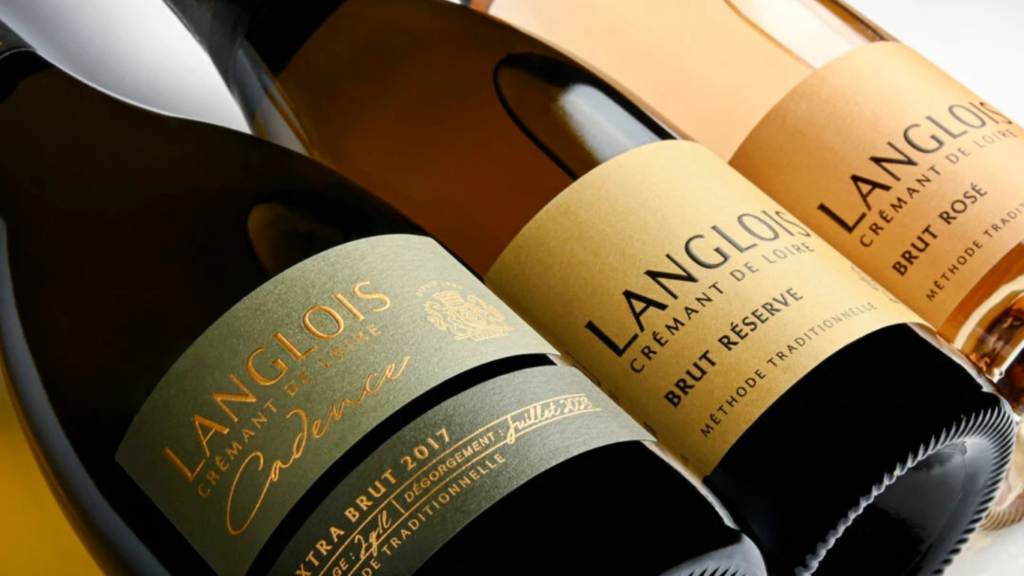
The region’s tuffeau limestone caves, originally quarried for the stone that built the Loire’s famous châteaux, provided ideal cool, humid cellars for ageing. Other houses followed: Bouvet-Ladubay in 1851 and Langlois-Château in 1885. By the late nineteenth century these Saumur producers were exporting significant volumes, at times outselling Champagne houses in certain British markets.
Earlier still wines of the Loire had long travelled north via the river to Dutch merchants, but bubbles were initially viewed as a fault. Once the traditional method took hold, the region’s reputation for fine sparkling wine grew steadily. In 1936 several still and sparkling appellations received official recognition. The decisive step came on 17 October 1975, when the Crémant de Loire AOC was created by decree, giving a single, quality-focused identity to traditional-method wines from Anjou, Saumur, Touraine and Cheverny.
How Crémant de Loire Is Made
Crémant de Loire must be produced by the traditional method: a second fermentation inside the bottle followed by extended ageing on the lees. Hand harvesting is compulsory, and whole-bunch pressing is carefully limited to protect the delicacy of the juice. The base wines are then bottled with a liqueur de tirage that triggers the secondary fermentation.
Minimum ageing on the lees is twelve months, though many producers extend this to eighteen or twenty-four months for greater complexity. After riddling and disgorgement, a dosage determines the final style, most commonly Brut. The resulting pressure is typically around four bars, producing a softer, creamier mousse than the more assertive bubbles of Champagne.
White wines account for the large majority of production, with rosés making up roughly thirteen per cent. Yields are controlled, with a base maximum of 74 hectolitres per hectare, ensuring concentration and quality.
Grapes, Terroir and Style
Chenin Blanc is the undisputed star of white Crémant de Loire. Its natural high acidity, citrus and apple notes, and capacity to develop honeyed complexity with age give the wines their backbone. Chardonnay adds elegance and structure, while Orbois (a rare local variety) appears in small amounts.
For rosés and some blanc de noirs styles, Cabernet Franc is the principal red grape, contributing red-berry freshness and aromatic lift. Supporting varieties include Grolleau, Pinot Noir, Pineau d’Aunis and Cabernet Sauvignon. This palette allows producers considerable stylistic freedom while remaining true to the Loire’s character.
The terroir spans more than 200 kilometres of the middle Loire. In Saumur the chalky tuffeau soils echo Champagne’s chalk, while Anjou offers schist and Touraine brings varied limestone and clay. An oceanic climate moderated by the river encourages slow ripening and the preservation of freshness that defines the best bottles.
Growth, Recognition and Key Producers
Today Crémant de Loire ranks among France’s leading sparkling wines by volume, second only to Champagne and sometimes trading places with Crémant d’Alsace depending on the vintage. Recent figures show production in the region of 22–28 million bottles annually from roughly 3,000–3,600 hectares and around 600 producers. Roughly half the volume is exported, with Germany the largest market, followed by the United Kingdom and the United States.
Large maisons based in Saumur still dominate volume: Ackerman, Bouvet-Ladubay, Gratien & Meyer and Langlois-Château (now part of the Bollinger group). Alongside them, a growing number of independent growers and cooperatives produce distinctive, often longer-aged cuvées that highlight specific terroirs.
The appellation’s fiftieth anniversary in 2025 prompted renewed attention from the wine press and trade, reinforcing its reputation for value and consistency. British retailers have reported strong growth in Crémant sales overall, with Loire examples frequently praised for their balance of fruit, acidity and fine texture.
Challenges and Resilience
Like many French wine regions, the Loire has faced climatic variation, rising production costs and shifts in consumer habits. Global warming has brought both earlier harvests and the need for careful vineyard management to retain acidity. Economic pressures have encouraged producers to emphasise quality and storytelling rather than pure volume.
The response has been pragmatic. Strict AOC rules on hand harvesting, limited yields and traditional-method production protect the category’s identity. Many houses have invested in longer lees ageing and more precise blending. The result is a wine that continues to gain admirers precisely because it offers reliable pleasure at accessible prices.
Quick Facts
| Detail | Information |
|---|---|
| Full Name | Crémant de Loire AOC |
| Established | 17 October 1975 |
| Region | Anjou, Saumur, Touraine, Cheverny (Loire Valley) |
| Main Grapes | Chenin Blanc, Chardonnay, Cabernet Franc |
| Production Method | Traditional method (bottle fermentation) |
| Minimum Lees Ageing | 12 months |
| Typical Styles | White and rosé, mostly Brut |
| Annual Production | Approx. 22–28 million bottles |
| Known For | Freshness, value, Loire character |
Legacy and Lasting Appeal
Crémant de Loire has secured its place by offering a genuine alternative to Champagne rather than a pale imitation. Its reliance on Chenin Blanc gives it a flavour profile Champagne cannot replicate: bright orchard fruit, floral notes and a lively, food-friendly acidity. The extensive network of tuffeau cellars and the region’s long sparkling tradition provide continuity and authenticity.
Public perception has shifted from “affordable fizz” to a respected category in its own right. Sommeliers and retailers increasingly recommend it for aperitifs, seafood and lighter celebrations. Its success demonstrates that quality sparkling wine can thrive outside the most famous postcode when producers respect both tradition and their own terroir.
Conclusion
From Jean-Baptiste Ackerman’s early experiments in Saumur caves to the polished, widely available bottles of today, Crémant de Loire has followed a steady path of improvement and recognition. It remains one of the most satisfying ways to enjoy traditional-method sparkling wine without the premium associated with Champagne.
Whether you prefer a crisp Blanc de Blancs based on Chenin Blanc or a fragrant Cabernet Franc rosé, the appellation rewards curiosity. Its combination of craftsmanship, distinctive Loire character and approachable pricing ensures it will continue to find new admirers for years to come.



Leave a Reply