
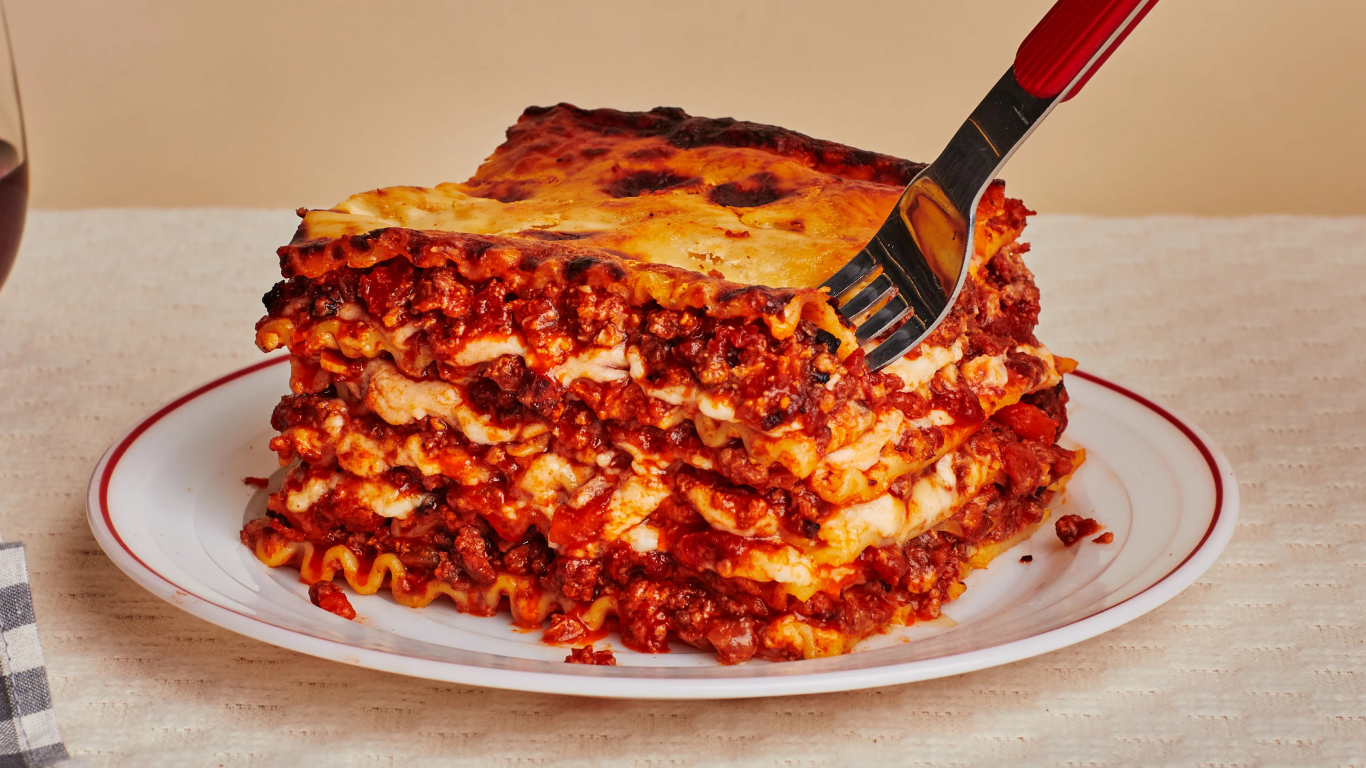
Few dishes evoke the warmth and richness of Italian home cooking quite like an authentic Italian lasagna recipe. Layer upon layer of silky pasta, slow-simmered ragù, and creamy béchamel, this Emilia-Romagna speciality has captivated palates for centuries. While countless variations exist worldwide, the true Lasagne alla Bolognese stands apart for its refined balance and deep flavours.
This is no quick weeknight bake. An authentic Italian lasagna recipe demands patience, quality ingredients, and respect for tradition. Yet the result is worth every minute: a comforting, elegant centrepiece that feels both rustic and luxurious. Whether you’re planning a special family gathering or simply craving a taste of Italy, mastering this classic delivers pure satisfaction.
The Origins of Lasagna: From Ancient Roots to Bolognese Icon
The story of lasagna stretches back to the Middle Ages in Italy. The earliest known written reference appears in 1282 in Bolognese records, with the first recipes emerging in the 14th century. While ancient Greeks had flat dough strips called laganon, the modern layered baked pasta evolved in Italy.
The version we cherish today as the authentic Italian lasagna recipe hails from Bologna in Emilia-Romagna. Here, it evolved into Lasagne alla Bolognese, featuring fresh egg pasta (often spinach-tinged lasagne verdi), rich ragù alla Bolognese, and béchamel sauce. This combination was later codified by culinary authorities preserving Italian heritage.
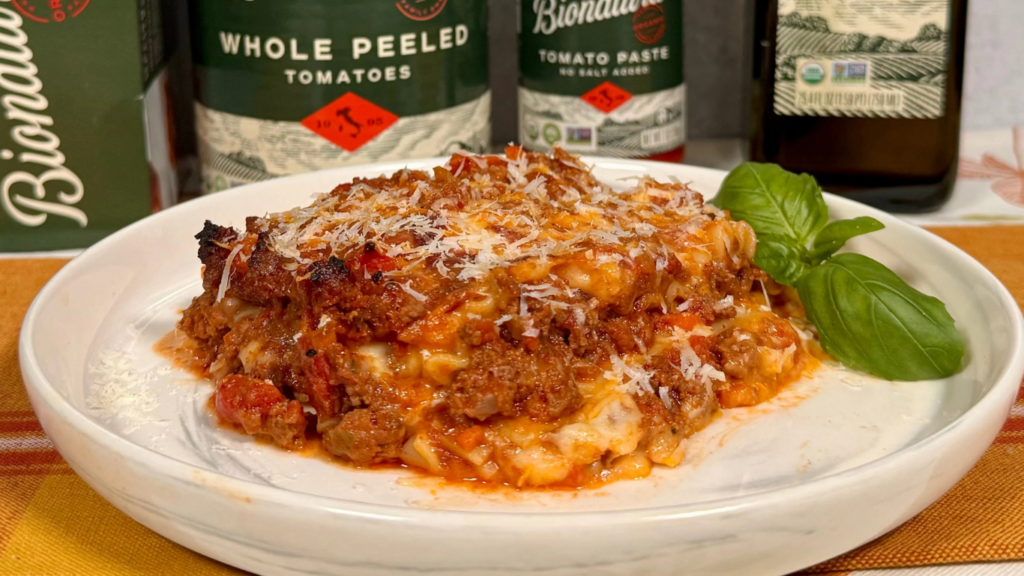
Unlike American-style versions heavy with ricotta and mozzarella, the traditional Bolognese preparation keeps things simpler and more delicate. No ricotta. No excess cheese. Just harmonious layers that allow each component to shine.
Key Components of an Authentic Italian Lasagna Recipe
The Ragù alla Bolognese
At the heart lies the ragù, a slow-cooked meat sauce that simmers for hours. Traditional recipes use a mixture of minced beef (sometimes with pork or pancetta), finely diced soffritto (onion, carrot, celery), tomato passata, white wine, milk, and broth. The milk tenderises the meat and adds subtle sweetness, while long simmering creates incredible depth.
Authentic versions avoid shortcuts. A proper ragù develops over three to four hours, allowing flavours to meld into something greater than the sum of its parts.
Fresh Pasta Sheets
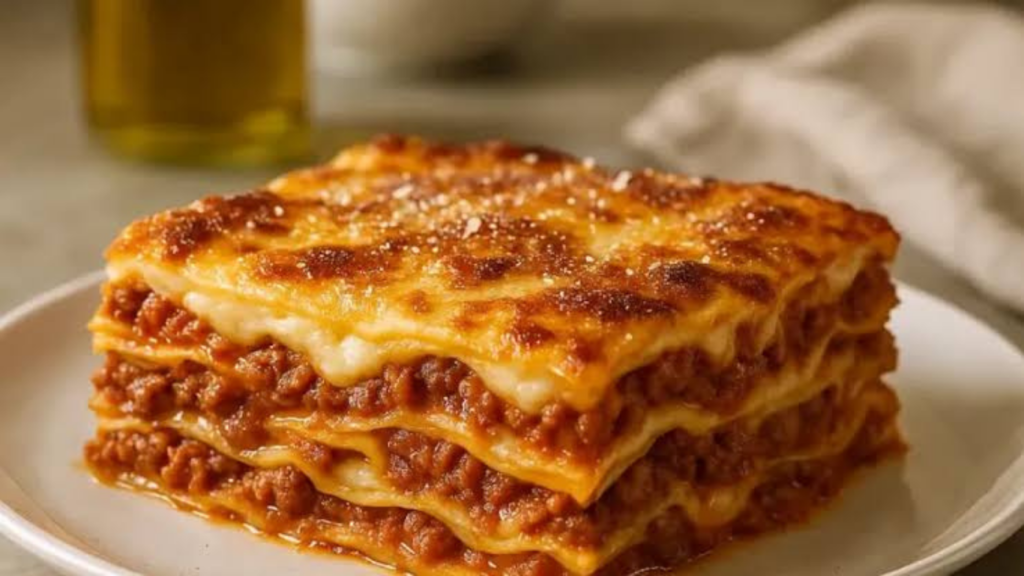
True enthusiasts make fresh egg pasta or spinach pasta. The sheets are rolled thin, briefly boiled, and layered while still pliable. Dried pasta works in a pinch, but fresh elevates the dish to restaurant quality.
Béchamel Sauce
This creamy white sauce of butter, flour, and milk brings luxurious silkiness. A hint of nutmeg is traditional. It contrasts beautifully with the savoury ragù without overpowering it.
Parmigiano-Reggiano
Generous grating of aged Parmigiano-Reggiano between layers and on top delivers nutty sharpness and golden crust.
Step-by-Step Guide to the Authentic Italian Lasagna Recipe
Serves 8–10 Prep time: 2–3 hours (including sauces) Cook time: 30–40 minutes baking
Ingredients (approximate, based on traditional methods)
For the Ragù (make ahead):
- 1kg good-quality minced beef (or beef/pork mix)
- 200g pancetta, finely chopped
- 1 large onion, 1 carrot, 1 celery stalk (soffritto)
- 600g tomato passata
- 250ml whole milk
- 200ml dry white wine
- 300ml meat broth
- Olive oil, salt, pepper, nutmeg (optional)
For the Béchamel:
- 60g butter
- 60g plain flour
- 1 litre whole milk
- Salt, pepper, nutmeg
For the Pasta:
- Fresh egg or spinach lasagna sheets (about 400–500g flour equivalent for homemade)
To assemble: Plenty of grated Parmigiano-Reggiano and butter for the dish.
Method
- Prepare the Ragù: Gently sauté the finely diced soffritto in olive oil until soft. Add pancetta and cook until fragrant. Increase heat, add minced meat, and brown thoroughly. Pour in wine and let it evaporate. Stir in milk and simmer until absorbed. Add passata and broth. Season lightly. Simmer on the lowest heat for at least 3 hours, stirring occasionally. The sauce should be rich and thick but not dry.
- Make the Béchamel: Melt butter, whisk in flour to form a roux, then gradually add warm milk. Cook until thickened and smooth. Season with salt, pepper, and a grating of nutmeg. Cover with cling film to prevent a skin forming.
- Cook the Pasta: If homemade, roll dough thin and cut into sheets. Boil briefly in salted water (2–3 minutes), then plunge into cold water and lay flat on cloths to dry.
- Assemble: Preheat oven to 180–190°C (fan). Butter a deep 23x33cm baking dish. Start with a thin layer of ragù, then pasta sheets (slightly overlapping), more ragù, a layer of béchamel, and grated Parmesan. Repeat for 6–8 layers, finishing with béchamel and cheese. Dot with butter.
- Bake: Cover with foil for the first 20 minutes, then uncover for a golden top. Let it rest 15–20 minutes before slicing – this is essential for clean layers.
Regional Variations and Common Misconceptions
While Lasagne alla Bolognese reigns supreme in the north, southern Italy offers different takes. Neapolitan versions often include meatballs, ricotta, mozzarella, and hard-boiled eggs in a richer tomato sauce. Genoa might incorporate pesto. These reflect Italy’s wonderful regional diversity, but they are distinct from the classic Bolognese preparation.
A frequent mistake outside Italy is overloading with cheese or using quick jarred sauces. The authentic Italian lasagna recipe celebrates restraint and quality ingredients.
Personal Touches and Tips for Success
Many Italian nonnas insist on making the ragù the day before, as flavours improve overnight. Use the best Parmigiano you can find – it makes a noticeable difference. For spinach pasta, blanch and purée fresh spinach into the dough for that signature green hue.
Quick Facts: Authentic Italian Lasagna
| Detail | Information |
|---|---|
| Full Name | Lasagne alla Bolognese |
| Origin | Bologna, Emilia-Romagna, Italy |
| Key Components | Fresh pasta, ragù Bolognese, béchamel, Parmigiano |
| Traditional Since | Codified in 19th–20th century (roots earlier) |
| Servings | Typically 8–12 |
| Signature Feature | No ricotta or mozzarella |
Why the Authentic Italian Lasagna Recipe Endures
This dish represents Italian cooking at its finest: respect for ingredients, time-honoured technique, and food that brings people together. In an era of fast meals, the effort involved in a proper lasagna feels like an act of love.
The lessons are clear – good food rewards patience, simplicity often trumps complexity, and sharing a meal strengthens bonds.
conclusion
the authentic Italian lasagna recipe is more than instructions on a page. It’s an invitation to slow down, gather loved ones, and savour something truly special.




Leave a Reply