
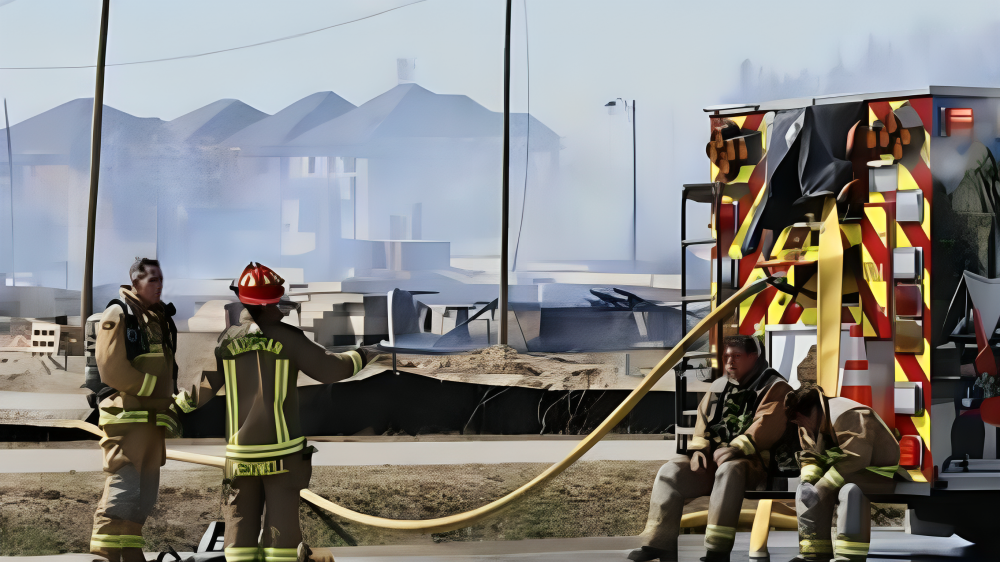
The pine valley fire swept through southern Utah in June 2025, leaving a trail of ash, heartbreak, and — ultimately — extraordinary human resolve. Known officially as the Forsyth Fire, this wildfire burned across thousands of acres of wilderness, forced entire communities to evacuate, and destroyed homes that families had built with their own hands. And yet, out of all that devastation, something remarkable happened: neighbors showed up for neighbors, firefighters worked around the clock, and a tight-knit community refused to be broken.
This article takes a deep, thorough look at everything you need to know about the pine valley fire — from the spark that started it all, to the long road of rebuilding that continues today.
What Exactly Is the Pine Valley Fire?
The pine valley fire, officially called the Forsyth Fire, is a wildfire that ignited on June 19, 2025, in the Pine Valley Mountain Wilderness area of Washington County, Utah. The fire started just above the Forsyth Trail in the Pine Valley Ranger District of the Dixie National Forest — a beautiful stretch of rugged terrain that many Utahns know and love.
A lightning strike was responsible for sparking the blaze, and extreme fire weather — including high winds and dangerously dry conditions — drove it to expand across approximately 15,600 acres of both private property and Forest Service lands. Within days, it had become one of the most serious wildfires Utah had seen in years.
Well, here’s the kicker: this wasn’t just a forest problem. It was a community crisis.
How the Fire Started and Spread So Quickly
Lightning is a natural part of life in the American Southwest, but on June 19, 2025, a single bolt changed the lives of hundreds of people in Pine Valley. The Forsyth Fire near Pine Valley, Utah, quickly grew to 7,045 acres with 0% containment in just the first few days. That kind of growth doesn’t happen by accident — it’s a perfect storm of environmental factors.
Several conditions allowed the fire to spread so fast:
- Dry fuel loads: Years of drought had turned vegetation into tinder. Dead grass, dry shrubs, and parched trees were all waiting for a spark.
- High winds: Winds returned from the southwest at 15–20 MPH, most affecting south-facing slopes, pushing flames rapidly across the terrain.
- Wilderness zone restrictions: Both the northeast and southwest fire edges were within the Pine Valley Wilderness Area, where firefighters use minimal-impact strategies due to restrictions on equipment use in wilderness zones. This made it significantly harder to cut fire lines quickly.
- Topography: The fire moved through steep canyons and ridgelines, making ground access extremely difficult.
Interestingly, the fire wasn’t just one single front — it was burning across multiple flanks simultaneously, which made it that much harder to fight.
The Human Toll: Homes Lost and Communities Evacuated
This is, without a doubt, the most heartbreaking part of the story. The Forsyth Fire burned over 15,000 acres and destroyed 17 homes over the course of a month, making it one of Utah’s largest and most destructive wildfires of the year.
The communities of Pine Valley and Grass Valley were placed under “Go” evacuation orders to ensure public safety and allow fire crews to operate effectively. Pinto was placed under a “Set” status, with residents prepared to evacuate if fire activity moved northwest.
For residents like Tondi Hobaica, the return home was bittersweet. Her house — a quiet retreat from Las Vegas she had purchased five years ago — was one of the 14 destroyed in the fire. “Probably next to me having cancer, my house burning down was the second-worst thing I’ve ever experienced,” she said. “We still owe a mortgage, we have to pay for cleanup. One day, we say we’re rebuilding. The next day, we say we’re not.”
Pine Valley Fire Chief Robert Hardy noted that most of the homes lost belonged to part-time residents, and two of the homeowners were actually volunteer firefighters themselves.
Among the most striking stories was that of firefighter John Robson. Even though Robson had previously thinned and trimmed trees around his property, the fire incinerated his mountain home to the ground, leaving nothing to recover except a metal lawn-art flower. “We’re a family,” he said of his fire department. “It keeps me going.”
Governor Cox Calls It a Miracle
When Utah Governor Spencer Cox arrived at Pine Valley on June 22, 2025, the smoke was still thick in the air. He told reporters, “It’s a combination of really great work and a little bit of luck, but I believe it’s divine intervention as well.” He acknowledged that homes had been lost but said, “We can replace property; we can’t replace people.”
Cox also pointed to something important: the role of proactive forest management. He credited forest treatments such as grazing and logging that had taken place at Pine Valley for protecting some areas, saying “we need more of them” and noting that even “blue states” are starting to believe in the importance of such measures.
Honestly, it’s hard to argue with that logic. Where forests had been pre-treated, the fire burned less aggressively. Where they hadn’t, the results were devastating.
Firefighters: The Real Heroes of the Pine Valley Fire
Let’s give credit where credit is due — the firefighters who battled the pine valley fire were nothing short of extraordinary. They worked in brutal heat, against unpredictable winds, and on extremely challenging terrain.
Here’s a snapshot of what crews were doing on the ground:
- Air support: Fire retardant was successfully dropped by air resources along a ridgeline near an old burn scar on the southwest flank, helping to slow the fire’s progression.
- Handline construction: Firefighters constructed a handline from the valley floor up toward Water Canyon, which connects to a dozer line coming from the north.
- Structure protection: Crews used fire-resistant materials and worked to extinguish hot spots near homes and campgrounds.
- Drone technology: Crews used drones for fuel reduction while ground crews worked to control the spread of the fire.
- Mop-up operations: Firefighters continued mop-up operations in the fire’s northwest interior where behavior had calmed. Natural features like rock bands and meadows helped slow the fire’s spread.
By mid-July, fire crews had reached 72% containment on the Forsyth Fire. Strategic aerial drops on the southern edge of the fire, where flames in the canopy had threatened to intensify, allowed tankers and helicopters to push the fire back down to the forest floor, enabling ground crews to safely engage.
It was a long, hard-fought battle — but little by little, the line held.
The Role of the Red Cross and Community Support
When disaster strikes, communities either splinter or pull together. Pine Valley pulled together. The American Red Cross responded swiftly, offering practical support to displaced residents and those whose homes had been damaged.
Trained disaster volunteers from the American Red Cross of Utah were on the ground in Pine Valley to assist residents returning home after the evacuation. Volunteers offered services including financial assistance and help with replacing medications and medical equipment.
Benjamin Donner, Executive Director of the American Red Cross Central and Southern Utah Chapter, stated: “Wildfires don’t discriminate, and no community is immune to the devastating impact of a fast-moving fire. Hot, dry conditions combined with strong winds can turn a small spark into a disaster. Preparing ahead of time and following evacuation orders can save lives.”
The sentiment in Pine Valley was much the same. Neighbors helped neighbors fill sandbags, clear debris, and begin the long process of rebuilding. The fire department hosted community sandbag-filling parties and helped residents clear streambeds running along properties. Crews and residents were also talking with each other about how to make their homes more resilient in future fires.
What the Pine Valley Fire Did to the Land
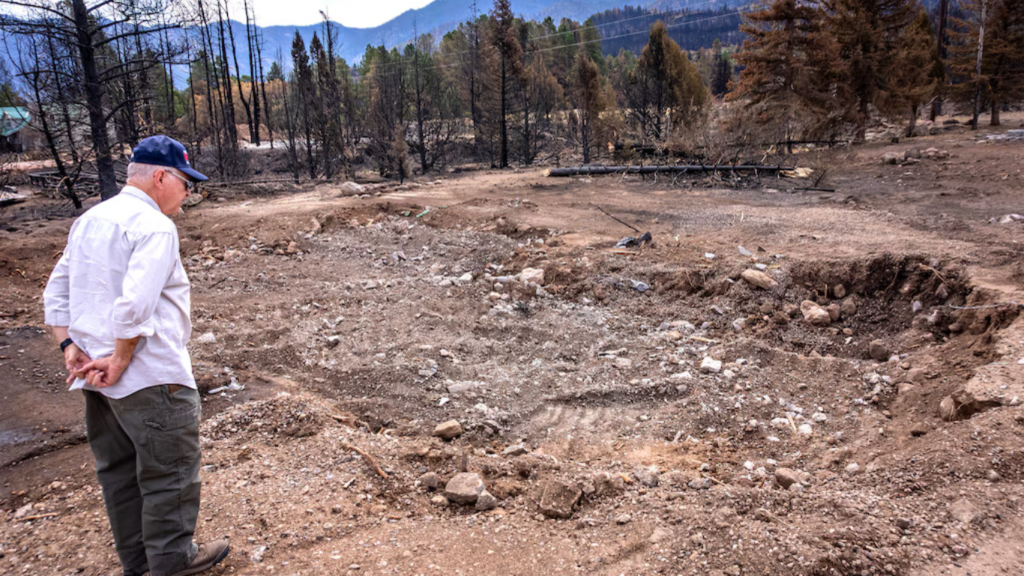
Beyond the homes and structures, the pine valley fire left a significant scar on the land itself. That’s not just an aesthetic problem — it’s an ecological one with long-lasting consequences.
Here’s a summary of the key environmental damage caused by the fire:
| Area Affected | Type of Damage | Status (as of early 2026) |
| Pine Valley Recreation Area | Burn damage, flooding, debris flows | Closed through 2026 season |
| Pine Valley Reservoir Dam | Structural damage requiring full rebuild | Under reconstruction |
| Forest trails and campgrounds | Destroyed or severely damaged | Rehabilitation underway |
| Watershed | Risk of flooding and debris flows | Ongoing monitoring |
| Wildlife habitat | Loss of approximately 15,600 acres | Seeding and replanting begun |
Since the fire, the area has experienced storms that brought flooding and debris flows, causing additional damage to the Pine Valley Recreation Area. In other words, the fire didn’t just burn — it set off a chain reaction of natural hazards that continued for months afterward.
The Recovery and Restoration Plan: Looking Ahead With Hope
Here’s the good news, and there really is good news: serious, well-funded, and carefully planned recovery work is already underway.
Rehabilitation work includes emergency stabilization, hazard tree removal, and other restoration activities such as seeding and tree planting, and eventually campground reconstruction of areas impacted by the Forsyth Fire. Hazard tree removal in the Pine Valley Recreation Area will begin as early as January 2026 and into 2027, using heavy equipment and tractor-trailers.
Construction crews are on-site, breaching the reservoir to allow it to dry out, and crews are building a channel around the reservoir to reroute water. The project is expected to be completed by early 2027.
The Pine Valley Recreation Area and campground will remain closed at least through the 2026 season for public safety and rehabilitation work. It’s a tough pill to swallow for outdoor enthusiasts, but it’s absolutely the right call.
Firewise Lessons Learned from the Pine Valley Fire
Every disaster carries a lesson, and the pine valley fire taught the state of Utah — and the broader nation — some critical ones. Experts noted that “out of crisis, we can find learning opportunities.” The most notable wildland fire losses in Utah in 2025 were the Forsyth Fire, the Monroe Canyon Fire, the Deer Creek Fire, and the Millcreek Fire — all pointing to a pattern of increasing risk in the wildland-urban interface.
One major takeaway was the power of “firewise” landscaping and property preparation. A piece of legislation titled House Bill 48 — Wildland Urban Interface Modifications — passed in March 2025 and took effect on January 1, 2026. It aims to increase awareness of wildfires and encourage property owners to share the responsibility of reducing risk in the wildland-urban interface.
Key firewise principles that can help homeowners protect their properties include:
- Clear defensible space of at least 30–100 feet around structures
- Use fire-resistant building materials for roofs, siding, and decks
- Thin vegetation and remove dead trees and brush near the home
- Create ember-resistant zones by sealing gaps and vents
- Maintain green, well-watered landscaping immediately around the house
- Have an evacuation plan ready before fire season begins
The Dixie National Forest’s Pine Valley Wildfire Crisis Landscape Project encompasses 250,000 acres in the Pine Valley Ranger District and aims to treat about 63 percent of National Forest System lands within the landscape to reduce the risk of catastrophic wildfire, improve watershed health, and improve forest resilience. That’s a bold and ambitious strategy — and it’s exactly the kind of long-term thinking the region needs.
The Spirit of Pine Valley: A Community That Refuses to Give Up
Perhaps the most powerful story to come out of the pine valley fire isn’t about the fire at all — it’s about the people. There’s something truly remarkable about the way this small Utah community responded to one of the worst disasters in its recent history.
Larry Gardner, a Pine Valley resident who chose to stay behind during the evacuation, watched from his property as a helicopter dipped a bucket into his backyard pond to gather water to fight the blaze. “I’m grateful I haven’t lost my home, but I feel so bad for the 13 friends that have lost theirs,” he said.
That’s the spirit of Pine Valley, right there.
Even as residents dealt with grief, insurance nightmares, and the question of whether to rebuild, many refused to leave. Fire Chief Robert Hardy said, “We’re still here, and we’re still in a vulnerable state. I want people to understand that this is going to be a long-term thing for us.”
And yet — they press on. Community meetings continue. Sandbag parties happen.
Conclusion
The pine valley fire — the Forsyth Fire of June 2025 — will be remembered as one of the most significant and transformative events in southern Utah’s recent history. From the lightning strike that started it all, to the 15,600 acres it burned, to the 17 homes it destroyed, to the thousands of lives it disrupted, this was no ordinary wildfire.
But here’s what’s equally true: the response was no ordinary response. Firefighters risked everything. Volunteers showed up. Communities held together.
The pine valley fire tested this community — but it did not defeat it. The trees will grow again. The campgrounds will reopen. The trails will welcome hikers once more.
FAQs
What caused the pine valley fire?
Extreme fire weather — including high winds and very dry conditions — caused it to grow rapidly to over 15,600 acres.
How many homes were destroyed in the pine valley fire?
The Forsyth Fire destroyed approximately 17 structures in total, including 13 to 14 residential homes. Most of the homes lost were secondary or part-time residences. Several outbuildings were also destroyed in the blaze.
Is Pine Valley Recreation Area open after the fire?
No. As of early 2026, the Pine Valley Recreation Area, including all trails and campgrounds, remains closed to the public. The U.S.
How long will it take for Pine Valley to fully recover?
Full recovery is expected to take several years. Experts warn that the burn scar could lead to flooding and debris flows for the next three to five years.
What lessons did the pine valley fire teach about wildfire prevention?
The pine valley fire highlighted the critical importance of firewise landscaping, defensible space around structures, and proactive forest treatments like thinning and prescribed burns.










Leave a Reply