
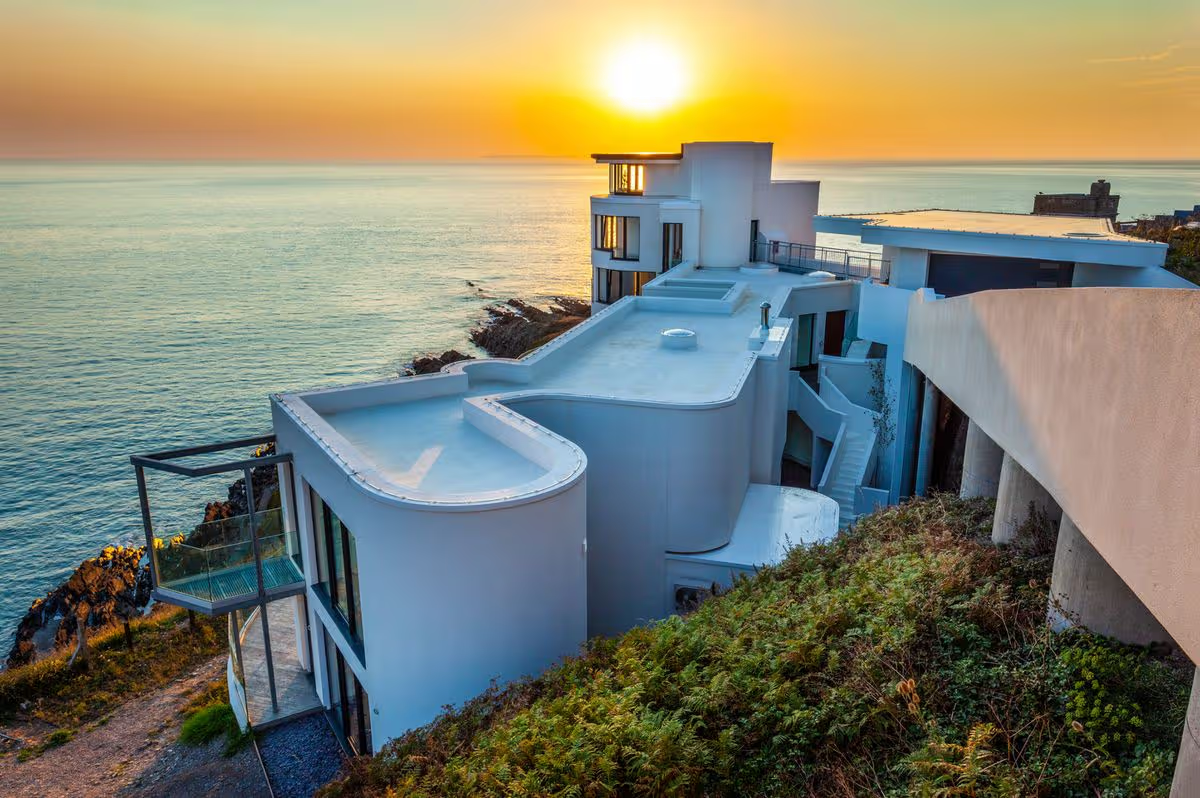
Few self-build projects have captured the public imagination quite like the Grand Designs lighthouse. Perched on a dramatic North Devon clifftop above Croyde Bay and Saunton Sands, this striking white Art Deco-inspired home became one of the most talked-about episodes in the long-running Channel 4 series. Viewers watched as owner Edward Short poured years of his life, and a fortune, into realising a childhood vision of a lighthouse-style house with sweeping sea views.
The project, officially known as Chesil Cliff House (later renamed The Crest), was never just about bricks and mortar. It was a story of ambition, engineering ingenuity, financial pressure and personal cost. Even after the house was finally completed and sold, interest in the Grand Designs lighthouse has remained strong. People continue to be drawn to its extraordinary location, bold design and the very human drama that unfolded on screen.
Early Life and Background
Edward Short grew up in Plymouth, with time also spent in Bournemouth. The sea was a constant presence in his childhood and left a lasting impression. He has spoken of missing the crashing waves after moving inland for work, a longing that eventually drew him back to the Devon coast.
His professional life began in the music industry. After early jobs that included caddying as a teenager, he entered record sales with Polygram. A defining move came with the creation of the Euphoria compilation CD series, launched around 1999. The brand sold approximately six million copies and generated substantial income through royalties at a time when physical music sales still dominated. This success funded a move from London to Devon with his wife Hazel and their two daughters, Nicole and Lauren, in 2004.
In 2008 the family bought a 1950s seven-bedroom clifftop house near Croyde for £1.4 million. Although the location was spectacular, Short felt the existing property did not do justice to the site. Inspired by the white modernist villas he had seen while promoting club nights in Ibiza during the 1990s, he began planning a complete replacement: a bold, lighthouse-like home designed by architect Professor Alan Phillips.
Career and Rise to Fame
Short’s music-industry earnings gave him the financial confidence to pursue an ambitious self-build. Planning permission was secured in 2010. The vision was clear: a gleaming white four-storey tower with a circular “storm room” offering 360-degree views, an infinity pool, cinema, sauna and generous living spaces, all engineered to sit securely on a challenging clifftop site.
The Grand Designs lighthouse project first appeared on screen in an episode that aired in 2019. By then the story had already stretched far beyond the original 18-month timetable and £1.8 million budget. Host Kevin McCloud followed the complex piling work required to anchor the structure into the bedrock, the construction of a secondary three-bedroom house known as The Eye (intended to help raise further finance), and the mounting pressures of weather, engineering demands and changing economic conditions.
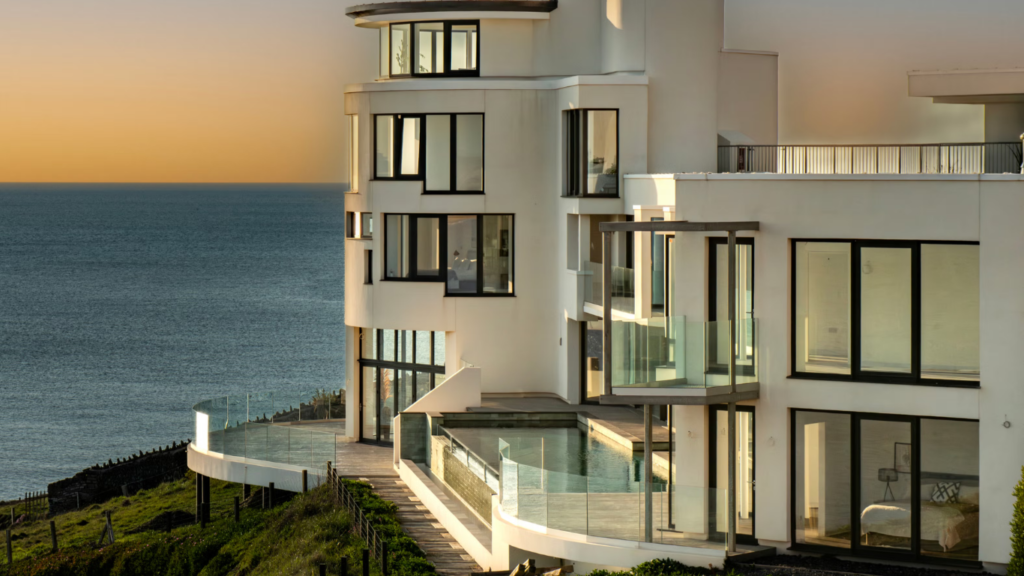
Despite the difficulties, the finished building is widely regarded as an architectural achievement. Contrasting rectangular and circular forms create a distinctive silhouette. Large expanses of glass frame panoramic views across Croyde Bay, Saunton Sands and the UNESCO Biosphere Reserve of Braunton Burrows. A private beach cove and cantilevered driveway complete the dramatic setting. The house and its annexe together occupy roughly three acres.
Public recognition came primarily through the television coverage. The 2019 episode and the later revisit in 2022 turned the Grand Designs lighthouse into one of the series’ most memorable projects. McCloud later described the completed home as a “defiant monument to perseverance.”
Personal Challenges or Turning Points
The build did not go according to plan. The original lender withdrew, forcing a rethink. The Eye was constructed at a cost of around £1 million in the hope that it could be leveraged for further funding, yet the hazardous nature of the main site reduced its value. CD sales declined with the rise of streaming, cutting Short’s income at a critical moment. Storms, complex engineering requirements and successive funding arrangements stretched the timeline to roughly 12 years.
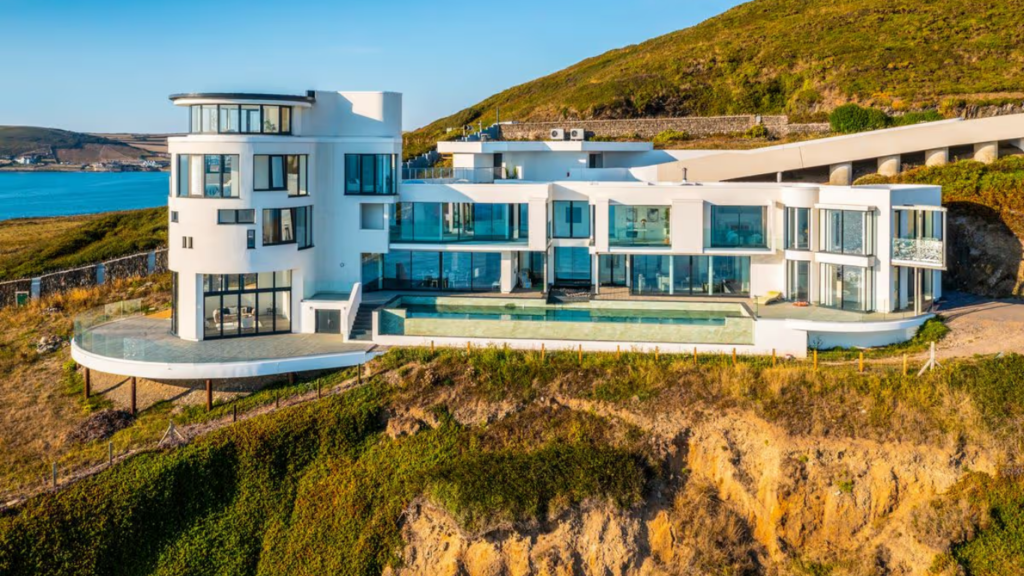
By the time cameras returned for the 2019 episode the main structure was still a rusting steel-and-concrete shell. Short has spoken openly about the strain the project placed on family life. The marriage to Hazel ended; he has expressed guilt about the impact on her and their daughters, who at times helped raise small sums through car-boot sales. Debt figures reported in interviews ranged into several millions of pounds.
Work eventually restarted in 2020 after new financing arrangements were agreed. The house reached a “white-box” finish around 2022–2023 – complete structurally but left without fitted kitchens or bathrooms so a future buyer could personalise the interiors. Short never lived in the finished home.
Personal Life
Edward Short and Hazel Short shared two daughters, Nicole and Lauren. The couple separated during the long construction period but have remained on amicable terms; Short has described Hazel as having worked hard, including cleaning holiday lets and learning accountancy, to support the project in its difficult phases.
In later interviews Short spoke of a new relationship with Jalia Nambasa, though that partnership also ended. He has since moved to Bath and retrained as a prison officer, a role he has said connects with experiences from his own youth. He continues to keep a hand in music, organising anniversary events for the Euphoria brand.
No reliable public information confirms further private details beyond what Short himself has shared in interviews.
Later Career and Current Activities
Once completed, the Grand Designs lighthouse and its annexe were listed for sale. An initial asking price of £10 million in 2022 failed to secure a buyer. The property was later marketed by joint receivers at a reduced price of £5.25 million. The sale completed in October 2024.
Short has described the outcome as a financial loss but has also expressed pride that the original design was realised without compromise. He has joked about buying lottery tickets in the hope of one day reclaiming the house. Meanwhile he has focused on a quieter professional life and occasional music projects.
Kevin McCloud, reflecting after the sale, called the news “fantastic” and noted the emotional weight of a project that had occupied more than a decade of Short’s life.
Quick Bio
| Detail | Information |
|---|---|
| Full Name | Edward Short |
| Date of Birth | Circa 1968 (age 57 in 2025) |
| Place of Birth | Plymouth area, England |
| Nationality | British |
| Profession | Former music executive; later prison officer |
| Years Active | Music industry from 1980s/90s; self-build 2008–2024 |
| Known For | Grand Designs lighthouse (Chesil Cliff House / The Crest) |
| Estimated Net Worth | Not publicly confirmed; project left substantial debt |
Legacy and Lasting Impact
The Grand Designs lighthouse remains important because it illustrates both the possibilities and the risks of ambitious self-building. Architecturally it stands as a confident modern response to a spectacular coastal site, carefully engineered against erosion. On television it became a cautionary yet redemptive tale: a project that tested family resilience, financial limits and personal determination.
Public perception has shifted over time. Early coverage focused on the “saddest ever” label. Later reporting and McCloud’s own reflections have emphasised perseverance and the eventual completion of a remarkable building. For many viewers the story serves as a reminder that grand designs carry human consequences as well as architectural ones.
Conclusion
The Grand Designs lighthouse is more than a striking white tower on a Devon cliff. It is the physical result of one man’s long-held vision, shaped by engineering challenges, economic change and personal cost. Edward Short finished what he set out to build, even though the price was higher than anyone anticipated and the house was never his family home.
What remains is a distinctive piece of contemporary coastal architecture and a compelling chapter in the history of Grand Designs. The project continues to prompt discussion about ambition, risk and the meaning of home.



Leave a Reply