
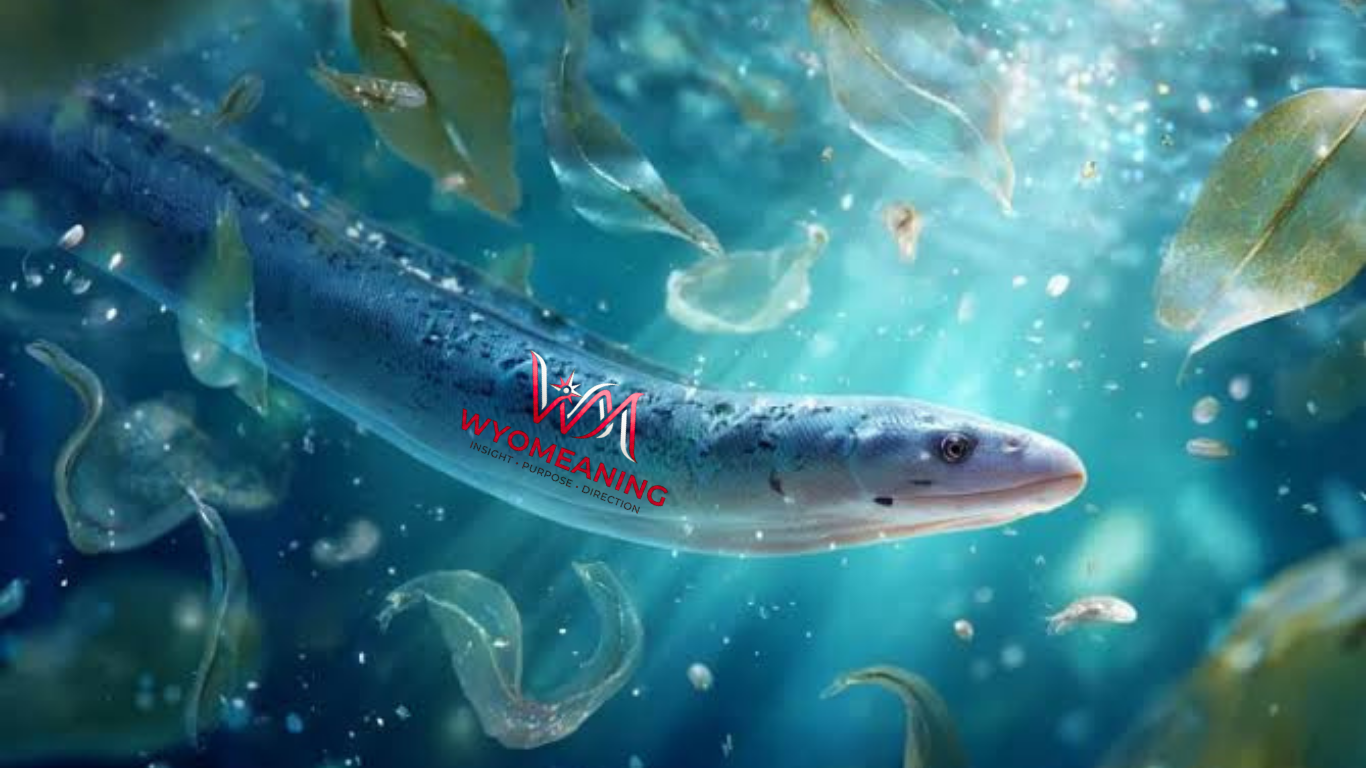
For centuries, the question of how eels reproduce has puzzled naturalists, philosophers and scientists alike. Aristotle wondered whether they sprang from mud. Sigmund Freud dissected hundreds without finding sexual organs. Today the answer leads us to one of the Atlantic’s most enigmatic stretches of water: the Sargasso Sea, a region that overlaps with the area popularly known as the Bermuda Triangle.
The link between eel reproduction and this part of the ocean is no urban legend. European eels (Anguilla anguilla) and American eels (Anguilla rostrata) undertake one of the longest and most extraordinary migrations in the animal kingdom to spawn there. Understanding how eels reproduce near the Bermuda Triangle reveals a life cycle of astonishing transformation, endurance and remaining scientific gaps.
The Historical Puzzle of Eel Origins
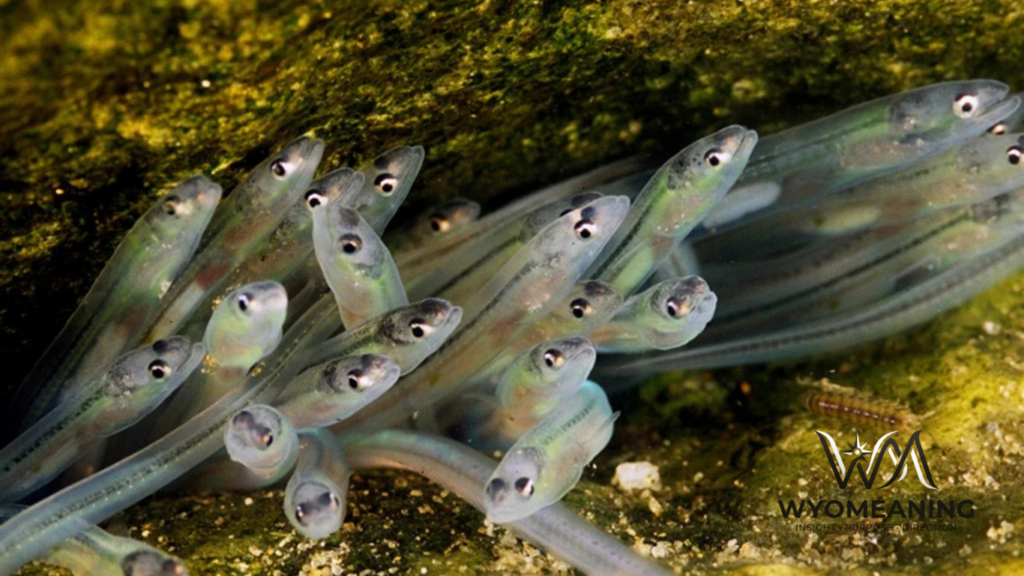
Before the twentieth century, people simply did not know where baby eels came from. No one had ever seen mature eels mating or found their eggs in European or North American rivers. Freshwater eels appeared fully formed as tiny transparent “glass eels,” then grew into the familiar yellow eels of rivers, lakes and estuaries. Their sudden appearance invited myths of spontaneous generation.
The breakthrough came from Danish biologist Johannes Schmidt. Over many years of ocean surveys beginning in the early 1900s, he collected leaf-shaped eel larvae known as leptocephali. As ships sailed westward from Europe, the larvae grew progressively smaller. The tiniest specimens, only a few millimetres long, clustered in the southern Sargasso Sea, roughly between Bermuda, the Azores and the West Indies. Schmidt concluded that this was the spawning ground. His work, published in the 1920s, established the foundation of modern understanding even though adult eels and eggs remained unseen.
The Epic Migration to the Sargasso Sea
Adult eels leave their freshwater homes as “silver eels.” They undergo dramatic physiological changes. Their eyes enlarge for deep-ocean vision, their skin becomes silvery, and their digestive systems largely dissolve to make space for developing reproductive organs. They stop feeding and live off stored energy for a journey that can cover 5,000 to 10,000 kilometres.
European eels head southwest across the Atlantic; American eels travel from the eastern seaboard of North America. Both species converge on the same broad region of the Sargasso Sea. Tracking studies using pop-up satellite archival tags have finally confirmed that adults reach these waters. In research published in 2022, eels tagged near the Azores were followed all the way to the presumed spawning grounds. Earlier work had already shown American eels travelling from Canadian waters into the northern edge of the Sargasso.
The Sargasso Sea itself is defined by circulating currents rather than land boundaries. Warm, saline water, floating sargassum seaweed and oceanic fronts create conditions that appear uniquely suited to eel spawning. The area lies within the wider zone often associated with Bermuda Triangle lore, which has inevitably drawn popular attention to the story.
What Happens When They Arrive?
Spawning is believed to occur mainly between late winter and spring, peaking around February to March, though evidence suggests activity can span a wider period and a longitudinal range of roughly 2,000 kilometres.
Females release hundreds of thousands to several million buoyant eggs into the water column. Males fertilise them externally. After spawning, the adults are thought to die; no mature eel has been recorded returning to freshwater. The eggs hatch within days into leptocephali. These transparent, willow-leaf-shaped larvae drift with the currents. European larvae ride the North Atlantic Drift toward Europe over one to three years; American larvae head west and north toward the continental shelf in roughly seven to twelve months.
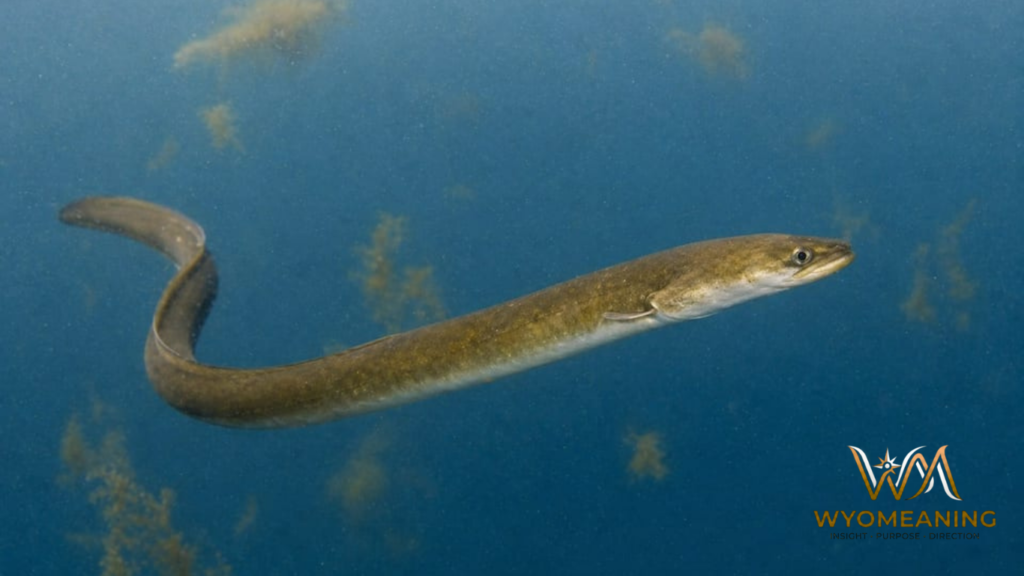
Upon nearing the coast they metamorphose into glass eels, enter estuaries and rivers, and begin the long growth phase that can last from several years to several decades before the cycle starts again.
Remaining Mysteries and Scientific Challenges
Despite a century of research, key details stay elusive. No one has yet observed eels mating in the wild or recovered eggs from the open ocean. Navigation remains poorly understood. How do animals that spend most of their lives in rivers orient across thousands of kilometres of featureless ocean? Magnetic fields, ocean chemistry, temperature fronts and celestial cues have all been proposed, but definitive proof is lacking.
Population declines have added urgency. European eel numbers have fallen dramatically since the 1980s, leading to critically endangered status. Barriers such as dams, turbines, habitat loss, overfishing of glass eels and possible climate-driven changes in ocean currents all threaten the long migration. Scientists continue to refine knowledge of spawning timing, larval growth rates and the precise environmental triggers that send silver eels seaward.
Why the Bermuda Triangle Connection Captures Attention
The popular association with the Bermuda Triangle arises simply because the Sargasso Sea occupies much of the same region of the western North Atlantic. Sensational accounts sometimes imply supernatural forces, yet the scientific story needs no embellishment. An animal that dissolves its own gut, swims for more than a year without feeding, and returns to the exact stretch of ocean where it was born already ranks among nature’s most remarkable feats.
Recent satellite-tagging successes have closed one long chapter of the mystery by proving adults do reach the Sargasso Sea. The next chapters—direct observation of spawning behaviour, full understanding of navigation, and effective conservation—remain open.
Quick Facts
| Detail | Information |
|---|---|
| Main species | European eel (Anguilla anguilla), American eel (Anguilla rostrata) |
| Spawning area | Southern Sargasso Sea (near Bermuda region) |
| Migration distance | 5,000–10,000 km |
| Life stages | Leptocephalus → glass eel → yellow eel → silver eel |
| Reproduction type | Semelparous (spawn once, then die) |
| Eggs per female | Typically 0.5–4 million (up to several million more in large females) |
| Larval drift time | Months to 3 years depending on species |
| Conservation status | European eel critically endangered |
Legacy of the Eel Mystery
The quest to understand how eels reproduce has driven oceanographic surveys, satellite technology and international collaboration for more than a hundred years. It has expanded knowledge of long-distance migration, larval dispersal and the role of oceanic fronts. Public fascination with the Bermuda Triangle connection has, for better or worse, kept the story in the wider conversation and helped highlight the vulnerability of these species.
conclusion
The eels’ journey from distant rivers to a remote stretch of the Atlantic and back again as larvae remains one of the great natural spectacles of the ocean. It reminds us how much of the living world still operates beyond easy observation.











Leave a Reply