
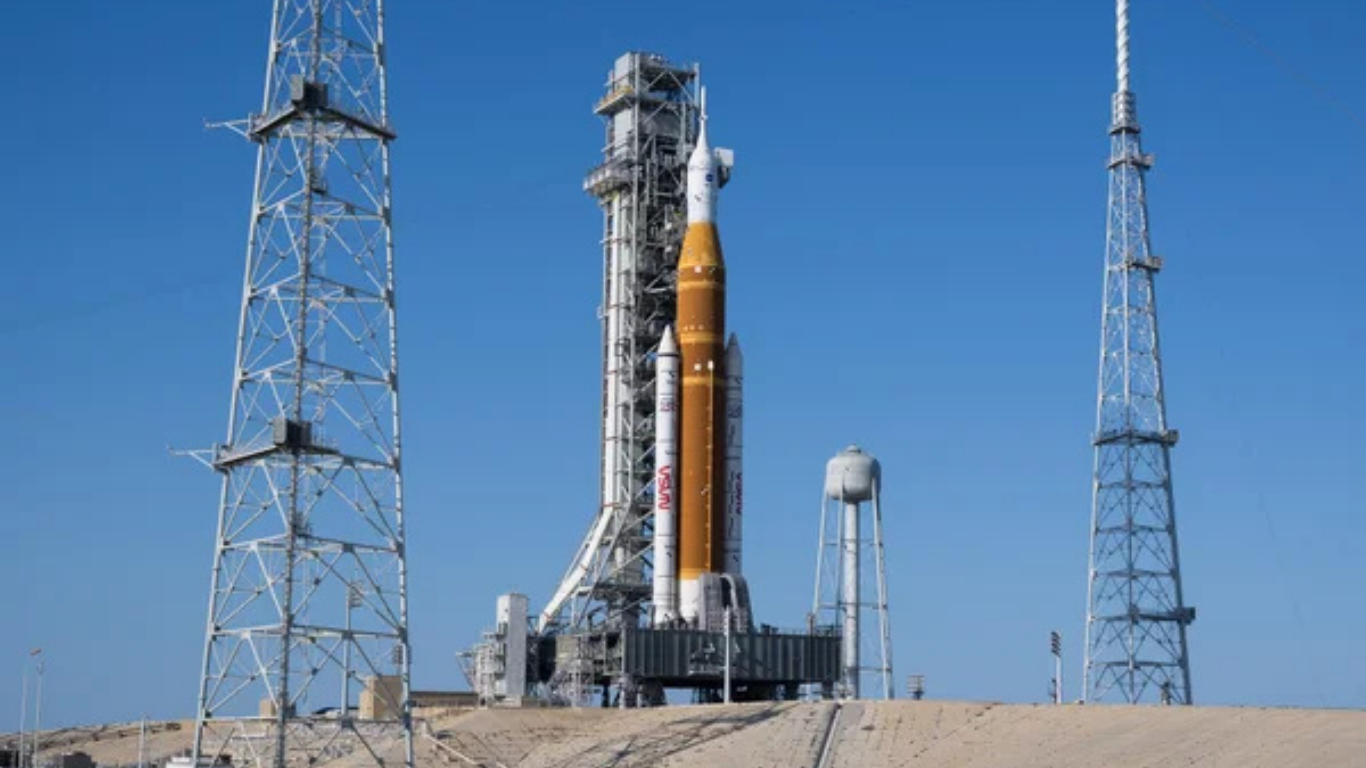
The NASA Artemis rocket launch has captured global attention as a defining moment in space exploration. On April 1, 2026, the powerful Space Launch System (SLS) rocket lifted off from Kennedy Space Center, carrying four astronauts on the Artemis II mission—the first crewed journey beyond low Earth orbit in more than 50 years. This historic event revives the legacy of the Apollo program while advancing sustainable lunar exploration and paving the way for human missions to Mars. By integrating advanced technology and international collaboration, the NASA Artemis rocket launch demonstrates NASA’s commitment to pushing the boundaries of human spaceflight.
The Vision Behind the Artemis Program
NASA’s Artemis program emerged from a clear goal: to establish a long-term human presence on the Moon and use it as a stepping stone for deeper space travel. Named after the Greek goddess of the Moon, Artemis builds directly on Apollo’s achievements but emphasizes diversity, sustainability, and scientific discovery. The program seeks to land the first woman and person of color on the lunar surface while testing technologies essential for Mars exploration. Through the NASA Artemis rocket launch, NASA aims to create a lunar economy that supports scientific research and commercial opportunities. This forward-thinking approach ensures humanity’s future in space remains inclusive and innovative.
Understanding the Space Launch System Rocket
At the heart of every NASA Artemis rocket launch stands the SLS, NASA’s most powerful rocket to date. Standing 322 feet tall, the SLS generates 8.8 million pounds of thrust at liftoff using four RS-25 engines and two massive solid rocket boosters. Designed to evolve across mission blocks, it can send the Orion spacecraft, astronauts, and cargo directly toward the Moon in a single launch. The rocket’s core stage burns liquid hydrogen and oxygen, delivering unmatched power for deep-space missions. Engineers have refined the SLS through rigorous testing to ensure reliability and safety for crewed flights.
Artemis I: The Successful Uncrewed Test Flight
Before the crewed NASA Artemis rocket launch, Artemis I proved the SLS and Orion spacecraft could handle the rigors of deep space. Launched in November 2022, this uncrewed test orbited the Moon and returned safely after traveling farther than any previous Orion mission. The flight validated critical systems including heat shield performance, navigation, and reentry capabilities. Data collected during Artemis I directly informed improvements for subsequent launches. This milestone confirmed that the SLS rocket could reliably propel missions far beyond Earth, setting the stage for human crews to follow.
Artemis II: The Historic Crewed Lunar Flyby
The April 1, 2026, NASA Artemis rocket launch of Artemis II marked a new chapter with astronauts Reid Wiseman, Victor Glover, Christina Koch, and Jeremy Hansen aboard Orion. The ten-day mission sends the crew on a lunar flyby, testing life-support systems, communication, and deep-space operations without landing. Traveling farther from Earth than any humans since Apollo, the crew gathers vital data on radiation and spacecraft performance. This flight builds confidence for future landings by demonstrating that the SLS and Orion can safely carry humans to the Moon and back.
Future Missions: Artemis III and Lunar Landings
Following Artemis II, NASA targets Artemis III for 2027, which will include the first crewed lunar landing since 1972. The mission will use the SLS rocket to launch Orion, then rendezvous with a commercial lander in lunar orbit. Astronauts will explore the lunar south pole, searching for water ice and conducting scientific experiments. Subsequent missions will expand to a lunar Gateway station for sustained operations. Each NASA Artemis rocket launch advances infrastructure and knowledge needed for a permanent Moon base. These efforts lay essential groundwork for eventual human expeditions to Mars.
Technological Innovations Driving Artemis Success
The NASA Artemis rocket launch showcases groundbreaking innovations that enhance safety and efficiency. Orion’s advanced heat shield withstands extreme reentry temperatures, while upgraded avionics provide precise navigation in deep space. The SLS incorporates reusable elements from the Space Shuttle era alongside modern manufacturing techniques for faster production. Life-support systems now recycle water and air more effectively, extending mission duration. These technologies not only support lunar exploration but also benefit future Mars missions by reducing reliance on Earth resupply. Continuous improvements ensure each launch delivers greater capability and reliability.
International Collaboration and Global Impact
International partners play a vital role in every NASA Artemis rocket launch, strengthening global cooperation in space. Canada contributed the robotic arm for the Gateway station, while the European Space Agency supplies Orion’s service module. Japan and other nations provide scientific instruments and habitat modules. This collaborative model distributes expertise and costs while fostering shared scientific discoveries. The Artemis Accords outline peaceful lunar exploration principles that guide participating countries. Through these partnerships, the NASA Artemis rocket launch inspires a new generation of scientists and engineers worldwide, promoting unity in humanity’s quest to explore the cosmos.
FAQs
What makes the NASA Artemis rocket launch different from previous Moon missions?
The NASA Artemis rocket launch uses the modern SLS rocket and Orion spacecraft, designed for sustainable exploration rather than short visits. Unlike Apollo’s one-time landings, Artemis focuses on long-term presence, diversity, and preparation for Mars. Each mission tests new technologies while building infrastructure like the lunar Gateway. This approach ensures safer, more productive journeys that benefit science and future generations.
Who flew on the Artemis II mission and what was their role?
Commander Reid Wiseman led the crew, with Victor Glover as pilot and Christina Koch and Jeremy Hansen serving as mission specialists. Koch became the first woman to fly this far from Earth. The international team conducted systems tests during the lunar flyby. Their experience will directly shape procedures for future landings.
When will humans land on the Moon again through Artemis?
NASA plans the first crewed lunar landing with Artemis III around 2027. The SLS rocket will launch Orion, which will dock with a commercial lander near the lunar south pole. Astronauts will explore the surface for several days before returning. Later missions will establish a permanent outpost.
How does the Artemis program prepare for Mars exploration?
Artemis develops technologies and operational experience needed for the longer journey to Mars. The NASA Artemis rocket launch tests deep-space life support, radiation protection, and landing systems in a realistic environment. Lessons from lunar operations will inform Mars habitat designs and crew procedures. This stepwise approach reduces risks for future Red Planet missions.
What challenges remain for future NASA Artemis rocket launches?
Key challenges include perfecting in-orbit refueling, managing radiation exposure, and ensuring reliable commercial landers. NASA continues refining the SLS for higher payload capacity in later blocks. International coordination and budget stability also require ongoing attention. Overcoming these hurdles will enable more ambitious missions beyond the Moon.
Conclusion
The NASA Artemis rocket launch symbolizes humanity’s renewed commitment to exploring the final frontier with purpose and collaboration. From the successful Artemis II flyby to planned lunar landings, each step advances scientific knowledge and inspires global audiences. The SLS rocket and Orion spacecraft form the backbone of a sustainable exploration strategy that extends to Mars and beyond. As these missions unfold, they remind us that space exploration unites people across borders in pursuit of discovery. The future of human spaceflight looks brighter than ever, driven by innovation and shared ambition











Leave a Reply