
A well-designed front garden does more than frame a house. It sets the tone for the entire property, lifts kerb appeal and often becomes the quiet pride of a neighbourhood street. Across the UK, homeowners are rethinking the traditional lawn-and-shrub formula in favour of smarter, more resilient front yard landscaping ideas that suit modern life, changing weather and the desire for lower maintenance.
Whether you live in a narrow terraced house, a semi-detached suburban home or a new-build plot, the front of your property offers surprising potential. The right mix of planting, paths and hard surfaces can turn an overlooked strip of ground into a welcoming, practical and wildlife-friendly space. This guide explores practical, stylish and climate-aware approaches that work in British conditions.
Why Front Yard Landscaping Matters More Than Ever
Front gardens face unique challenges. They endure constant foot traffic, car parking, bins, delivery drivers and the full force of weather. At the same time they are the first thing neighbours and visitors notice. A neglected frontage can make even a lovely house feel unloved, while thoughtful design can raise the perceived value of a property and make coming home a genuine pleasure.
Recent summers have brought longer dry spells and hosepipe restrictions in many areas. This has accelerated interest in drought-tolerant planting, permeable surfaces and designs that reduce the need for constant watering and mowing. At the same time, many people want more wildlife, more colour and less grey. The best front yard landscaping ideas now balance beauty with practicality and environmental sense.
Classic and Contemporary Styles to Consider
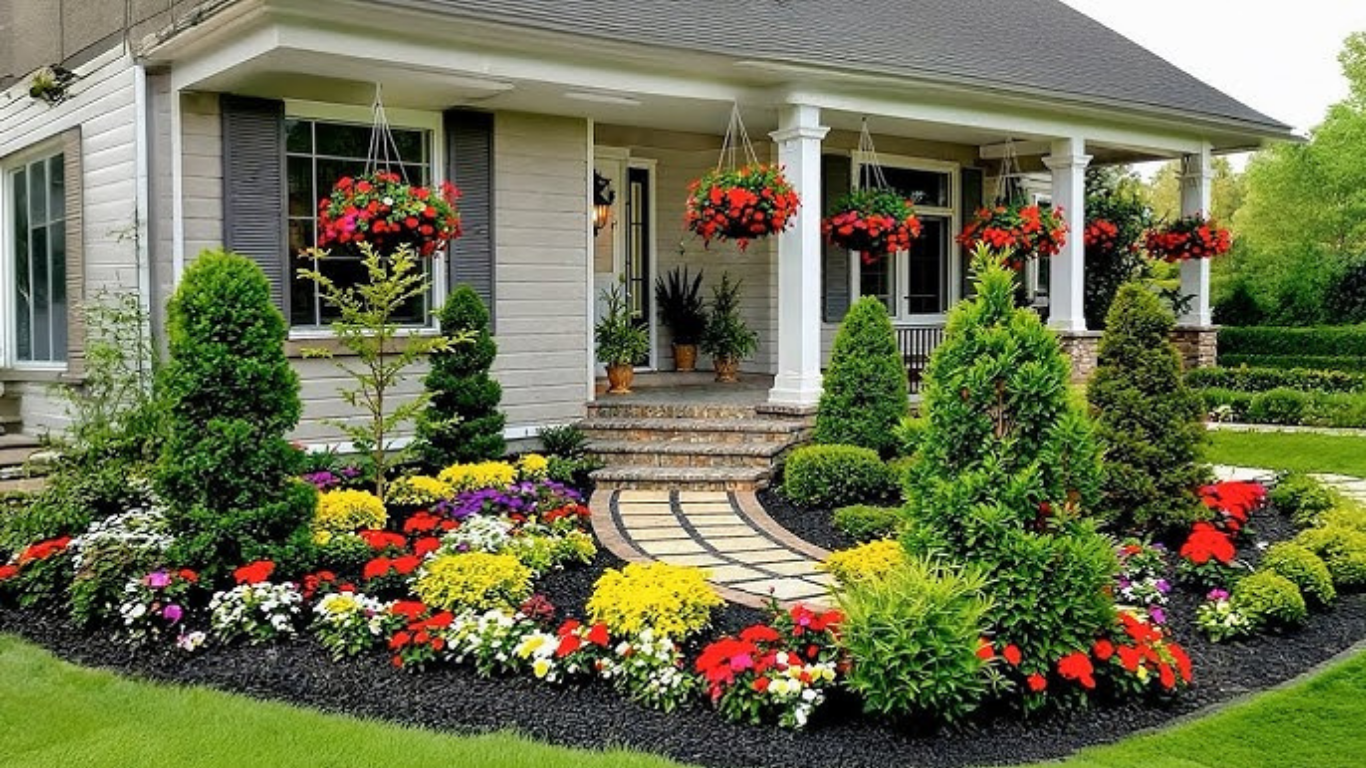
Cottage-garden charm remains a firm favourite for traditional British homes. Soft, layered borders filled with roses, lavender, hardy geraniums, foxgloves and ornamental grasses create a relaxed, abundant look. Paths can curve gently, and planting is allowed to spill slightly over edges for that lived-in feel. Even a modest plot can achieve this atmosphere with careful plant choice and repetition of a few key varieties.
For a cleaner, more modern appearance, geometric layouts work well. Straight or carefully angled paths of permeable block paving or resin-bound gravel, framed by clipped evergreens and architectural grasses, give a sense of order. Steel or timber edging keeps lines crisp. This style suits contemporary architecture and busy households that prefer minimal upkeep.
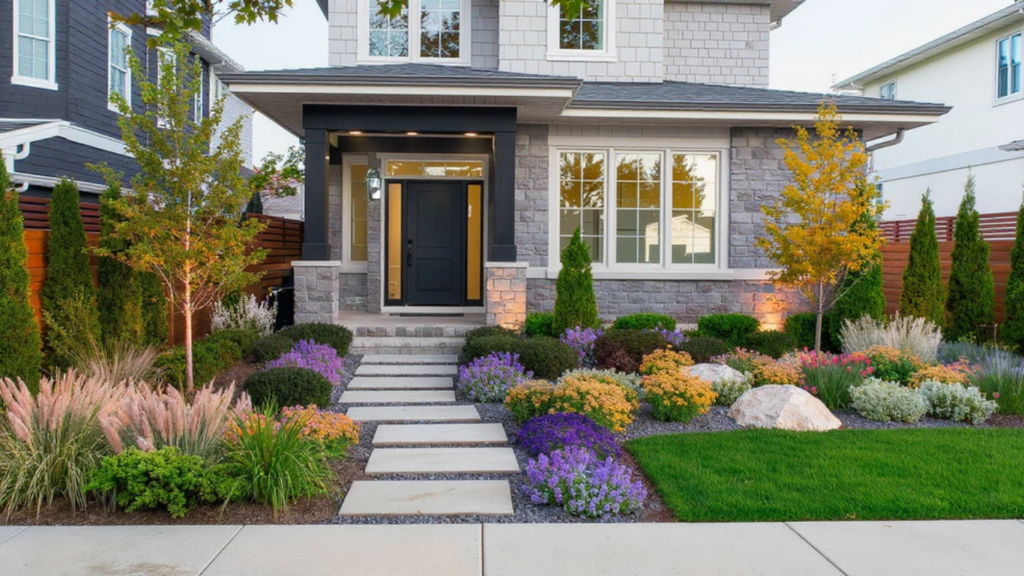
Mediterranean-inspired schemes have grown in popularity as summers warm. Olive trees (in sheltered spots), rosemary, thyme, salvias, lavender and sedums thrive with less water once established. Gravel or shingle surfaces replace thirsty lawn and create a bright, sun-drenched atmosphere even on cooler days. These plantings also suit south-facing frontages that receive strong sun.
Native and wildlife-friendly approaches are another strong trend. Replacing part or all of a lawn with a mix of native wildflowers, grasses and low-maintenance perennials supports bees, butterflies and birds. Once established, these areas need far less intervention than conventional turf.
Practical Low-Maintenance Front Yard Landscaping Ideas
Many of the most successful schemes start by reducing or removing large areas of lawn. Grass looks green in spring but demands regular mowing, feeding and watering, especially in dry summers. Alternatives include:
- Decorative gravel or slate chippings edged with timber or metal, interplanted with drought-tolerant perennials.
- Creeping thyme, sedum or other ground-cover plants that form a living carpet and release scent when walked on.
- Clover or fine fescue mixes that stay greener with less water than traditional lawn grasses.
Paths deserve careful thought. A clear, well-defined route from pavement to front door improves both safety and appearance. Permeable materials are essential for larger hard surfaces: under current rules, non-permeable paving over 5 m² in a front garden generally requires planning permission or must drain to a soakaway within the boundary. Resin-bound gravel, permeable block paving and open-jointed stone all comply while looking smart.
Raised beds or low retaining walls can solve sloping sites and improve soil quality. They also make planting easier to manage and add structure. Containers either side of the front door remain one of the simplest ways to create a strong focal point. Large pots planted with evergreen structure and seasonal colour work in almost any style of house.
Plant Choices That Perform in British Front Gardens
Year-round interest is the goal. Evergreen structure provides the backbone: yew, box (or disease-resistant alternatives such as Ilex crenata), lavender, Choisya, skimmia and compact hollies hold the design through winter. Seasonal colour then layers on top—spring bulbs, summer perennials such as salvias, nepeta and hardy geraniums, and autumn interest from Japanese anemones or ornamental grasses.
Drought-tolerant favourites that suit many UK conditions include lavender, rosemary, thyme, sedums, achillea, ornamental grasses such as Stipa tenuissima, and many salvias. For shadier frontages, Hydrangea petiolaris, ferns, hostas (if slugs can be managed) and Alchemilla mollis are reliable.
Small trees or large shrubs add height without overwhelming a modest plot. Amelanchier, multi-stemmed birch, crab apples or compact flowering cherries work well when positioned carefully away from foundations and underground services.
Hardscaping, Boundaries and Everyday Practicalities
Boundaries matter. A low hedge of mixed native species or clipped evergreen looks softer than solid fencing and supports wildlife. Timber or metal bin stores keep wheelie bins tidy and can be topped with a simple green roof of sedum for extra greenery.
Lighting is often overlooked yet highly effective. Subtle path lights or uplighting on a specimen plant improve safety and create atmosphere after dark. Solar options keep installation simple.
For households with electric vehicles, front gardens increasingly need to accommodate charging points alongside planting. Permeable parking surfaces combined with planting strips between bays keep the space green while meeting practical needs.
Trends Shaping Front Yards in 2026
Several clear directions stand out. Layered planting that mimics natural growth is preferred over rigid formal beds. Gravel gardens paired with resilient perennials are returning in a more refined form. Colour is welcomed rather than purely neutral schemes. Sustainable materials—reclaimed brick, local stone, permeable surfaces—feature strongly.
There is also growing interest in edible elements: herbs along paths, espaliered fruit against a sunny wall, or compact soft fruit in larger pots. These additions bring pleasure without turning the front garden into a full allotment.
Making the Ideas Work for Your Home
Start by assessing sunlight, soil, drainage and existing features. Sketch a simple plan that prioritises the route to the door, any parking needs and at least one third of the area given to planting. Choose a restrained plant palette and repeat key plants for cohesion. Improve compacted soil with organic matter before planting, and mulch well to retain moisture and suppress weeds.
Budget can be managed by tackling the project in stages—path first, then borders, then specimen plants. Many of the most effective transformations begin with removing a section of lawn and introducing structure rather than a complete redesign.
Quick Reference Table
| Detail | Information |
|---|---|
| Typical focus | Kerb appeal, low maintenance, climate resilience |
| Key materials | Permeable paving, gravel, timber/steel edging |
| Plant priorities | Evergreen structure + drought-tolerant perennials |
| Legal note (UK) | Non-permeable front paving over 5 m² may need consent |
| Popular styles | Cottage, modern geometric, Mediterranean, wildlife |
| Maintenance goal | Reduced mowing and watering |
Legacy of Thoughtful Front Gardens
Well-designed front yards do more than improve individual homes. They contribute to greener streets, support pollinators, slow rainwater runoff and make neighbourhoods more pleasant places to walk. In an era of denser housing and hotter summers, the collective effect of many small front gardens treated with care is significant.
The most successful schemes feel personal yet practical. They reflect the architecture of the house, the lifestyle of the occupants and the realities of the British climate. They reward the effort invested with daily pleasure and lasting value.
conclusion
Whether you choose a soft cottage border, a crisp modern layout or a resilient gravel garden, the principles remain the same: clear structure, plants that suit the site, and surfaces that work with the weather rather than against it. With these front yard landscaping ideas as a starting point, even the most ordinary frontage can become a quiet source of satisfaction and a welcoming face for your home.




Leave a Reply